






































The Importance of MEP BIM Coordination in Multi-Trade Projects
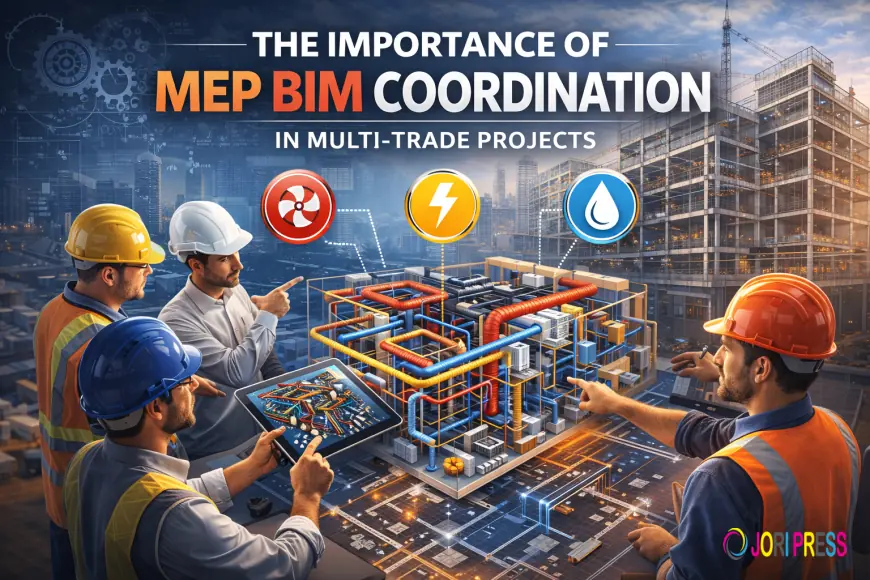
MEP BIM coordination plays a critical role in the success of modern multi-trade construction projects by aligning mechanical, electrical, and plumbing systems within a unified 3D model. As buildings grow more complex, traditional 2D workflows often lead to system clashes, costly rework, and schedule delays. BIM-based coordination acts as a digital conductor, enabling teams to identify and resolve conflicts before construction begins.

Construction projects are intricate ecosystems. Imagine a symphony where the conductor is missing, and the string, brass, and percussion sections are all playing from different sheets of music. Chaos ensues. In the world of construction, this chaos manifests as clashes between ductwork and structural beams, electrical conduits running through plumbing lines, and costly delays on-site.
This is where the concept of MEP BIM coordination comes into play. It is the conductor that ensures every trade—Mechanical, Electrical, and Plumbing—works in harmony within the structural and architectural framework. As buildings become more complex and timelines tighten, the role of precise coordination has shifted from a "nice-to-have" to an absolute necessity.
For modern multi-trade projects, success hinges on the ability to visualize and resolve conflicts before a single shovel hits the ground. This article explores how mep bim coordination services are revolutionizing the industry, turning potential onsite nightmares into streamlined, efficient builds.
What is MEP BIM Coordination?
To understand the power of this process, we first need to break down the acronyms.
MEP stands for Mechanical, Electrical, and Plumbing. these are the vital organs of a building. The mechanical system regulates temperature and air quality (HVAC); the electrical system powers lights and devices; and the plumbing system manages water supply and waste.
BIM stands for Building Information Modeling. Unlike traditional 2D CAD drawings, which are flat lines on a page, BIM is an intelligent 3D model-based process. It gives architecture, engineering, and construction professionals the insight and tools to more efficiently plan, design, construct, and manage buildings.
MEP BIM Coordination, therefore, is the integration of these critical systems into a master 3D model. It involves overlaying the architectural, structural, and MEP models to check for interferences. It moves beyond simple geometry; it involves data-rich models that allow teams to see exactly how a ventilation duct fits between steel beams or how a drainage pipe interacts with electrical trays.
The Benefits of MEP BIM Coordination
Implementing a robust coordination strategy offers transformative advantages for general contractors, engineers, and owners.
Improved Clash Detection
The most immediate benefit is the ability to identify "clashes." In the era of 2D drawings, a conflict between a pipe and a beam might not be discovered until the installation crew was standing on a ladder, tools in hand. This led to work stoppages and frantic Requests for Information (RFIs). With BIM, software automatically flags these physical overlaps (hard clashes) or clearance issues (soft clashes) during the design phase. Resolving these virtually is infinitely cheaper and faster than resolving them physically.
Enhanced Collaboration
Multi-trade projects often suffer from siloed working environments. The electrical team worries about circuits, while the HVAC team worries about airflow. BIM coordination forces these disciplines to sit at the same virtual table. It fosters a collaborative environment where teams visualize how their specific systems impact others, leading to proactive problem-solving rather than reactive blaming.
Increased Efficiency and Reduced Waste
Pre-coordination allows for off-site prefabrication. When you trust the model, you can cut pipes and assemble ductwork in a controlled factory environment, transport it to the site, and install it like a Lego set. This reduces material waste significantly and speeds up installation times.
Cost Reduction
Rework is the silent killer of profit margins. By utilizing professional mep bim coordination services, project managers can drastically reduce change orders caused by design errors. The upfront investment in coordination pays dividends by preventing the cascading costs of schedule delays and material waste.
Challenges in MEP BIM Coordination
Despite its clear advantages, achieving seamless coordination isn't without hurdles.
Data Interoperability
Different trades often use different software packages specialized for their needs. While Industry Foundation Classes (IFC) are intended to be a universal language for BIM, data loss or corruption can still occur when moving models between different platforms. Ensuring that the mechanical engineer’s software talks effectively to the architect’s software requires strict protocols.
Communication Barriers
Technology is only as good as the people using it. Even with the best 3D models, if the communication channels between the structural engineer and the plumbing contractor are broken, the coordination process will falter. Regular coordination meetings are essential to review the "clash reports" generated by the software.
The Need for Skilled Professionals
There is a steep learning curve associated with BIM technology. It requires a specific skill set that combines engineering knowledge with software proficiency. Many firms struggle to find or train in-house staff who can manage complex coordination tasks effectively. This is why many companies turn to specialized partners like Archdraw Outsourcing to handle the heavy lifting of model management and clash resolution.
Best Practices for Effective MEP BIM Coordination
To navigate these challenges and reap the full rewards, construction teams should adhere to a set of best practices.
Establish a BIM Execution Plan (BEP)
Before modeling begins, the team must agree on a BIM Execution Plan. This document serves as the rulebook. It defines the Level of Development (LOD) required for each stage, the file formats to be used, the coordinate system to ensure all models align, and the schedule for coordination meetings.
Prioritize Communication
Regular coordination meetings—often called "clash detection meetings"—are non-negotiable. These should not be finger-pointing sessions but collaborative workshops where the lead coordinator walks through major clashes, and the relevant trade representatives agree on solutions.
Utilize Cloud Collaboration Tools
Modern construction is rarely centralized in one office. Cloud-based platforms allow real-time access to the latest federated model. This ensures that the plumber on-site, the engineer in the office, and the architect across town are all looking at the exact same version of the truth, reducing version control errors.
Standardize the Hierarchy
When a clash occurs, who moves? It is generally accepted practice to establish a hierarchy of building elements. Typically, structural elements (beams, columns) are fixed. Gravity-fed plumbing lines are next in priority because they rely on slope. Pressurized pipes and electrical conduits are often the most flexible and are usually the ones moved to accommodate the rigid systems.
Building the Future with Coordination
The construction industry is moving away from the "design-bid-build-fix" mentality toward a more integrated, digital-first approach. MEP BIM coordination is the engine driving this shift. It transforms the job site from a place of reactive problem solving to a place of streamlined assembly.
While the learning curve can be steep and the software complex, the cost of not coordinating is far higher. In a competitive market where margins are thin and schedules are tight, the efficiency gained through digital coordination is often the difference between a project that is profitable and one that bleeds money.
Whether you are building a high-rise hospital with complex medical gas lines or a commercial office block with intricate HVAC requirements, the path to a successful handover lies in the details. By embracing comprehensive coordination strategies and leveraging expertise from firms like Archdraw Outsourcing, builders can ensure that their projects stand on a foundation of precision, efficiency, and collaboration.
What's Your Reaction?
 Like
0
Like
0
 Dislike
0
Dislike
0
 Love
0
Love
0
 Funny
0
Funny
0
 Angry
0
Angry
0
 Sad
0
Sad
0
 Wow
0
Wow
0