




































How Modern Text Extraction APIs Use Deep Learning for Document Understanding: A Developer’s View

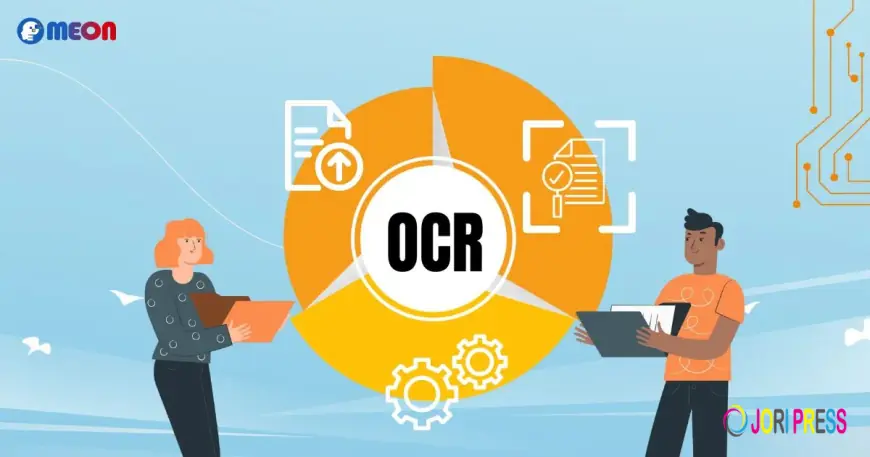
Businesses today process millions of documents—IDs, invoices, contracts, bank statements, KYC forms, and handwritten notes. Traditional OCR systems often fail to extract accurate and structured information, especially when the document has noise, complex layouts, multi-language text, or non-standard formats. This gap has pushed the evolution toward the Text Extraction API, powered by deep learning and advanced document understanding models.
From a developer’s perspective, these modern APIs are no longer simple OCR engines. They are full document-comprehension systems capable of reading, interpreting, structuring, and validating data with human-like accuracy. In this article, we explore how a Text Extraction API works under the hood, how deep learning enables document understanding, and what developers need to know when integrating these systems into workflows.
Why Traditional OCR Was Not Enough
Earlier OCR engines depended on rule-based logic, template matching, and pixel-to-character mapping. These methods worked only when:
-
The document layout was predictable
-
The image quality was clean
-
The font and formatting were standard
-
There were no overlapping elements or handwriting
As soon as developers tried to extract data from noisy scans, mobile photos, skewed documents, or multi-column pages, accuracy dropped drastically.
A modern Text Extraction API solves these problems using deep learning models that understand context, patterns, semantics, and visual structure—similar to how humans process documents.
Deep Learning as the Core of Document Understanding
Deep learning has transformed text extraction from simple character recognition to multi-layered document intelligence. The core technologies powering the evolution are:
a. Convolutional Neural Networks (CNNs) for Visual Feature Extraction
CNNs help detect:
-
Lines, boxes, and structural elements
-
Logos, stamps, and seals
-
Noise, skew, blur, and background distortions
These features enable preprocessing, denoising, and orientation correction—essential for reliable extraction.
b. Transformer Models for Text and Semantic Understanding
Transformers like BERT, LayoutLM, and Donut allow the Text Extraction API to understand text in context. Instead of reading characters independently, these models analyze:
-
Word relationships
-
Reading order
-
Entity meaning
-
Page structure
This is what enables extraction of fields like Name, DOB, Amount, Invoice Number, or Address even when the layout differs across documents.
c. Multi-Modal Learning for Layout + Text Hybrid Processing
Modern document models combine vision and language in a single neural architecture. This enables field-level comprehension such as:
-
Identifying a table and aligning rows
-
Understanding labels vs. values
-
Extracting information from nested or irregular layouts
-
Reading handwritten or cursive text
The result: 10× more accurate output compared to legacy OCR.
How a Text Extraction API Actually Works: The Developer’s Process Flow
Step 1: Image Preprocessing
The system cleans and enhances the input through:
-
Noise removal
-
Sharpness improvement
-
Contrast balancing
-
Skew correction
-
Layout detection
This ensures the deep learning model receives a high-quality representation.
Step 2: Visual + Semantic Modeling
The core engine then processes the file using:
-
Vision Transformers (ViT)
-
Layout-aware models
-
Sequence-to-sequence prediction
The output is not just text—it includes structure, hierarchy, and semantic labels.
Step 3: Entity Extraction and Classification
The system identifies and classifies entities such as:
-
Person names
-
Amounts
-
Dates
-
Addresses
-
Document numbers
Developers can map these entities to their own fields using schema definitions.
Step 4: Table and Grid Understanding
Modern APIs detect:
-
Cell boundaries
-
Header relationships
-
Row-column structures
Even if the table is angled or partially visible, deep learning reconstructs it logically.
Step 5: Validation and Confidence Scoring
Each extracted element is returned with:
-
A confidence score
-
A bounding box
-
A predicted category
Developers can create fallback workflows based on confidence thresholds.
Step 6: Output Delivery
Data is returned in JSON format:
{
"text": "...",
"entities": [],
"tables": [],
"confidence": {}
}
This makes integration seamless across KYC, onboarding, fintech, logistics, or automation platforms.
Real-World Developer Use Cases Enabled by Deep Learning
a. Automated KYC & ID Verification
APIs can extract and validate:
-
Name
-
Gender
-
DOB
-
Document number
-
Address
Useful for user onboarding, banking, fintech, and telecom workflows.
b. Invoice & Receipt Parsing at Scale
Developers can automate:
-
Vendor details
-
Itemized tables
-
GST/Tax fields
-
Total amounts
No templates required.
c. Bank Statement Analysis
The API extracts:
-
Transaction rows
-
Balances
-
Account details
This powers loan decisioning, underwriting, and income verification.
d. Legal and Compliance Document Digitization
Contracts can be processed for:
-
Clause identification
-
Party names
-
Timestamps
-
Obligations
Helping enterprises reduce manual review time.
Why Developers Prefer Modern Text Extraction APIs
**✔ No templates or manual rules
✔ Works for multi-language documents
✔ Learns continuously from new data
✔ Scales across industries
✔ Provides structured JSON output
✔ Integrates easily into backend workflows**
Deep learning eliminates the need to maintain custom logic. Instead, developers focus on building workflows, automation, and intelligence layers on top of the extracted data.
Implementation Tips for Developers
1. Use batching for high-volume processing
Minimizes API latency and improves throughput.
2. Pre-compress images before sending to the API
Reduces upload time without sacrificing accuracy.
3. Set confidence thresholds for critical workflows
Useful for KYC, payments, or compliance checks.
4. Leverage webhooks for asynchronous processing
Essential for heavy documents like PDFs > 20 pages.
5. Use field-level mapping to normalize outputs
Makes results compatible with internal data schemas.
Why Enterprises Prefer Meon Technologies for Text Extraction
Modern enterprises require accuracy, scalability, and speed for document processing. Meon Technologies delivers production-ready, deep-learning-driven extraction capabilities that reduce manual back-office workloads by 70–90%. With high accuracy, flexible APIs, and strong developer tooling, Meon Technologies offers end-to-end document intelligence for businesses building automation or KYC frameworks.
Conclusion
Deep learning has changed the capabilities of the Text Extraction API forever. Instead of simple OCR, we now have a complete document understanding ecosystem powered by multimodal neural networks, transformers, and semantic modeling. Developers can build robust, automated, and scalable workflows without worrying about templates or format variations. As industries continue moving toward automation-first operations, these APIs will play a central role in shaping the future of intelligent document processing.
What's Your Reaction?
 Like
0
Like
0
 Dislike
0
Dislike
0
 Love
0
Love
0
 Funny
0
Funny
0
 Angry
0
Angry
0
 Sad
0
Sad
0
 Wow
0
Wow
0