



































How Intelligent Text Recognition APIs Work: From Image Preprocessing to Structured Output

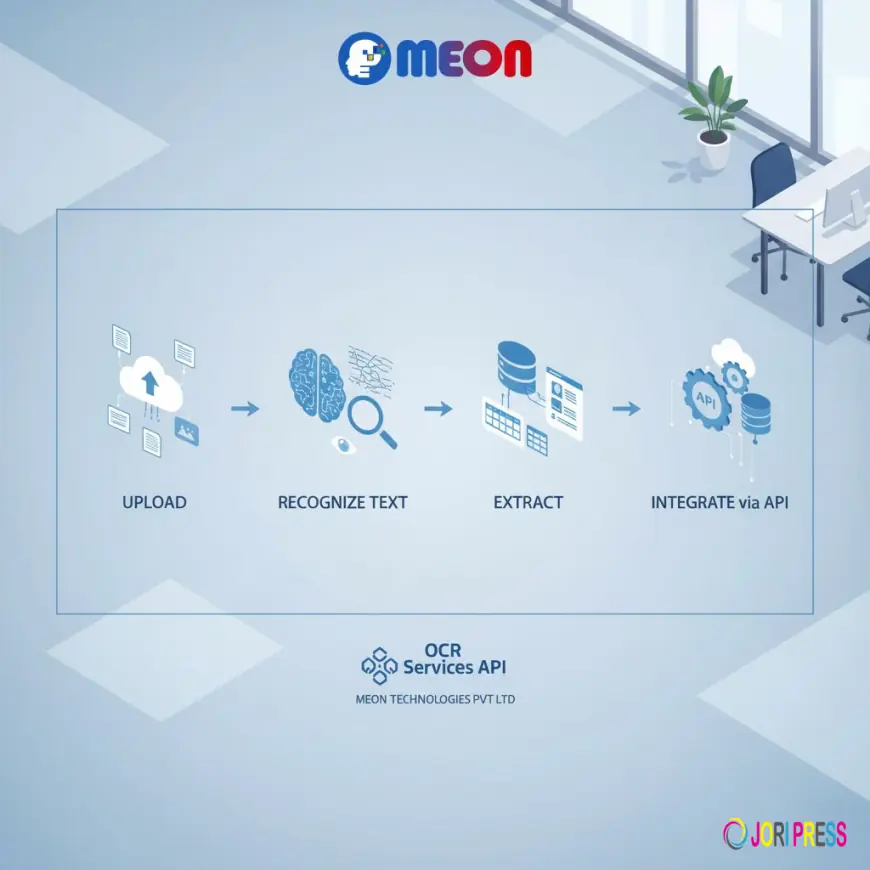
In modern digital workflows, extracting accurate data from images and documents is no longer optional—it is a core requirement for automation. From identity verification to document processing and compliance workflows, organizations increasingly rely on Intelligent Text Recognition API solutions to convert unstructured visual data into structured, machine-readable output. This article explains how these APIs work end to end, from raw image input to clean, validated data, with a focus on enterprise-grade implementation by meon technologies.
Understanding Intelligent Text Recognition APIs
An Intelligent Text Recognition API goes beyond basic optical character recognition. While traditional OCR focuses only on reading characters, intelligent systems understand document context, layouts, fields, and relationships between extracted data points. This intelligence allows businesses to automate workflows involving invoices, IDs, forms, certificates, and handwritten or printed records with high accuracy.
At meon technologies, text recognition systems are designed to handle real-world challenges such as low-quality images, inconsistent formats, multilingual content, and compliance-driven accuracy requirements.
Step 1: Image Acquisition and Input Handling
The workflow begins with image acquisition. Input may come from mobile cameras, scanners, uploaded PDFs, or real-time capture systems. Images often vary in resolution, orientation, lighting, and background noise.
An Intelligent Text Recognition API first standardizes these inputs by validating file formats, size limits, and resolution thresholds. This ensures consistent downstream processing and prevents data loss during recognition.
Step 2: Image Preprocessing for Accuracy
Image preprocessing is the foundation of accurate text extraction. Before any recognition happens, the API enhances the image using multiple techniques:
-
Noise reduction to remove background artifacts
-
Contrast normalization for better character visibility
-
Skew correction to align tilted documents
-
Cropping and edge detection to isolate relevant regions
This stage is critical because even advanced recognition models depend on image clarity. meon technologies emphasizes preprocessing optimization to maintain accuracy across mobile-captured and low-light images, a common challenge in real-world deployments.
Step 3: Text Detection and Region Segmentation
Once the image is optimized, the Intelligent Text Recognition API identifies text regions within the document. This process is known as text detection and segmentation.
Instead of treating the document as a flat image, intelligent APIs detect blocks such as headers, tables, key-value fields, paragraphs, and form sections. This layout awareness allows the system to distinguish between labels and values, which is essential for structured data output.
For example, in a form, the API understands that “Name” is a label and the adjacent text is its value. meon technologies builds APIs that adapt to dynamic layouts rather than relying on fixed templates.
Step 4: Optical Character Recognition (OCR)
After detecting text regions, the system performs OCR to convert visual characters into digital text. An Intelligent Text Recognition API uses trained recognition models capable of handling:
-
Printed and handwritten text
-
Multiple fonts and sizes
-
Multilingual scripts
-
Numeric and alphanumeric combinations
Unlike legacy OCR engines, intelligent APIs continuously improve accuracy using contextual learning and confidence scoring. meon technologies integrates recognition models optimized for enterprise document types such as identity records, certificates, and financial documents.
Step 5: Contextual Understanding and Field Mapping
This is where intelligence truly differentiates advanced APIs from basic OCR tools. An Intelligent Text Recognition API applies contextual analysis to understand what the extracted text represents.
Using document structure, linguistic patterns, and domain logic, the API maps raw text into meaningful fields such as names, dates, IDs, totals, or addresses. This step eliminates the need for manual data mapping and significantly reduces post-processing effort.
meon technologies focuses on contextual accuracy to ensure extracted data aligns with business logic and verification workflows.
Step 6: Data Validation and Confidence Scoring
After field extraction, the API validates the data for consistency and correctness. This includes:
-
Format validation (dates, numbers, IDs)
-
Cross-field checks (e.g., totals vs line items)
-
Confidence scoring for each extracted field
An Intelligent Text Recognition API returns not just data, but also confidence levels that help systems decide whether to auto-approve, flag, or route records for review. This is essential for compliance-heavy industries such as fintech, onboarding, and verification services supported by meon technologies.
Step 7: Structured Output Generation
The final output is delivered in structured formats such as JSON or XML, making it easy to integrate with existing systems. Each field is clearly labeled, validated, and ready for automation workflows.
A well-designed Intelligent Text Recognition API ensures that structured output aligns with downstream systems such as CRMs, verification engines, or analytics platforms. meon technologies prioritizes clean, standardized outputs to minimize integration effort for developers.
Step 8: API Integration and Scalability
From a developer perspective, ease of integration matters. Modern APIs are designed with RESTful endpoints, secure authentication, and scalable architectures.
meon technologies delivers Intelligent Text Recognition API solutions that support high-volume processing, low latency responses, and enterprise-grade security. This allows organizations to scale document automation without compromising performance or data integrity.
Why Intelligent Text Recognition APIs Matter
Manual data extraction is slow, error-prone, and costly. By using an Intelligent Text Recognition API, businesses achieve faster turnaround times, improved accuracy, and consistent data quality across workflows.
From onboarding and compliance to document digitization and verification, intelligent text recognition enables automation at scale. meon technologies continues to build solutions that combine technical depth with real-world reliability.
Conclusion
An Intelligent Text Recognition API is not just about reading text—it is about understanding documents end to end. From image preprocessing and OCR to contextual analysis and structured output, each stage plays a vital role in delivering reliable automation.
By focusing on accuracy, scalability, and developer-friendly design, meon technologies provides intelligent text recognition solutions that help organizations transform unstructured images into actionable data with confidence and precision.
What's Your Reaction?
 Like
1
Like
1
 Dislike
0
Dislike
0
 Love
1
Love
1
 Funny
0
Funny
0
 Angry
0
Angry
0
 Sad
0
Sad
0
 Wow
1
Wow
1