






































How Field Service Management Software Improves Customer Experience and Service Quality
Discover how field service management software improves response times, service quality, and customer experience through automation and CRM integration.

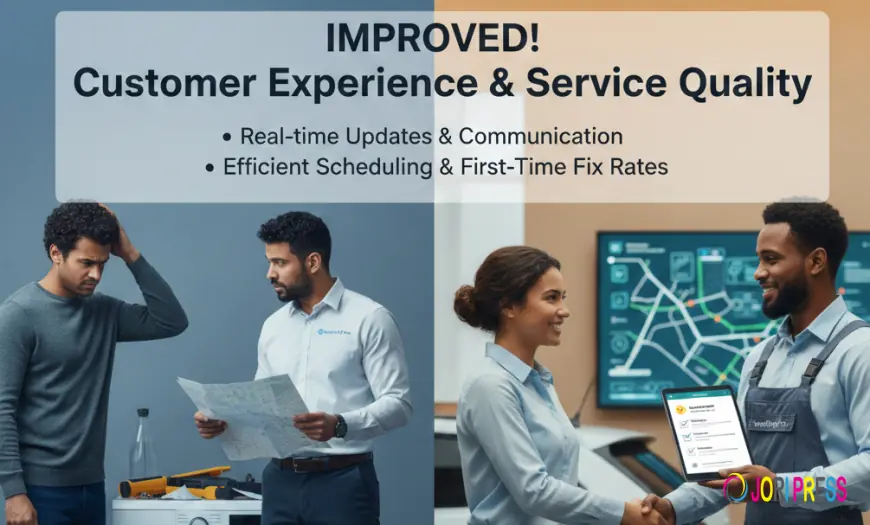
Customer expectations have evolved rapidly in recent years. Today’s customers demand fast response times, accurate service updates, and consistent quality across every interaction. For businesses that rely on field teams—such as installation, maintenance, repair, and support services—meeting these expectations can be challenging without the right technology. Field Service Management (FSM) software, especially when integrated with Customer Relationship Management (CRM), plays a key role in improving both customer experience and service quality.
Field Service Management software connects field technicians, service managers, and customers on a single digital platform. It ensures that service requests are handled efficiently, technicians are properly equipped, and customers remain informed throughout the service process. Solutions like Meon’s Field Service Management Software are designed to help businesses deliver reliable, customer-focused service at scale.
Faster Response Times and Better Scheduling
One of the most important factors influencing customer satisfaction is response time. Delays in scheduling or dispatching technicians often lead to frustration and negative customer perceptions. FSM software addresses this issue through automated job scheduling and intelligent dispatching.
Service managers can assign jobs based on technician availability, skill sets, and proximity to the customer location. This ensures faster arrival times and reduces unnecessary delays. Automated scheduling also minimizes human error and helps businesses handle a higher volume of service requests without compromising service quality.
Real-Time Updates and Transparent Communication
Customers value transparency, especially when it comes to service appointments and issue resolution. Field Service Management software improves communication by providing real-time updates on job status and technician progress.
Automated notifications can inform customers when a job is scheduled, when a technician is on the way, and when the service is completed. If delays occur, customers can be notified proactively rather than being left uncertain. This level of communication builds trust and demonstrates professionalism.
Internally, managers gain real-time visibility into field operations, enabling them to respond quickly to changes and ensure customer commitments are met.
Empowering Technicians for Better On-Site Service
The quality of on-site service depends heavily on how well technicians are prepared. FSM software equips field staff with mobile access to job details, customer history, service instructions, and required tools or spare parts.
With access to complete customer information, technicians can diagnose issues faster and deliver more personalized service. This reduces repeat visits, improves first-time fix rates, and creates a smoother experience for the customer.
Mobile tools also allow technicians to update job status, upload photos, and capture customer signatures instantly, reducing paperwork and administrative delays.
Consistent Service Through Centralized CRM
Consistency is a major driver of customer satisfaction. Integrated CRM ensures that all customer interactions—service requests, previous issues, communication history, and feedback—are stored in one centralized system.
This unified view enables service teams to provide consistent support regardless of which technician or agent is handling the request. Customers do not need to repeat information, and service teams can make informed decisions based on past interactions.
CRM integration also helps identify long-term customers, track service trends, and personalize communication, strengthening customer relationships over time.
Measuring and Improving Service Quality
Field Service Management software provides valuable insights through analytics and reporting. Key performance indicators such as response times, job completion rates, technician efficiency, and customer satisfaction can be tracked in real time.
By analyzing this data, businesses can identify gaps in service delivery and take corrective action. Training programs can be improved, processes refined, and service standards standardized across teams. Continuous monitoring ensures that service quality improves consistently rather than relying on reactive problem-solving.
Supporting Long-Term Customer Retention
A positive service experience increases the likelihood of repeat business and long-term customer loyalty. FSM software supports retention by ensuring reliable service delivery, clear communication, and quick issue resolution.
When customers feel informed, respected, and supported, they are more likely to trust the brand and recommend it to others. Over time, this leads to stronger customer relationships and sustainable business growth.
Conclusion
Field Service Management software is a powerful tool for businesses looking to improve customer experience and service quality. By enabling faster response times, transparent communication, better-prepared technicians, and consistent service delivery, FSM and CRM platforms help organizations meet and exceed customer expectations.
In a competitive service-driven market, investing in the right Field Service Management solution is not just about operational efficiency—it is about building trust, loyalty, and long-term success through exceptional customer experiences.
What's Your Reaction?
 Like
0
Like
0
 Dislike
0
Dislike
0
 Love
0
Love
0
 Funny
0
Funny
0
 Angry
0
Angry
0
 Sad
0
Sad
0
 Wow
0
Wow
0