





































Engineering Insights into GE Signal ISO AUX Technology
Explore GE Signal ISO AUX technology and its role in ensuring reliable signal isolation and safe turbine control system performance

Introduction to Signal Isolation in Turbine Environments
Turbine control systems operate in electrically harsh environments where high voltages, electromagnetic interference, and grounding inconsistencies are common. Gas and steam turbines rely on accurate data from numerous field devices—such as temperature sensors, pressure transmitters, and auxiliary control equipment—to maintain safe and efficient operation. In this context, signal integrity is critical. GE Signal ISO AUX technology is designed to address these challenges by providing reliable electrical isolation between field signals and sensitive control electronics.
What Is GE Signal ISO AUX Technology?
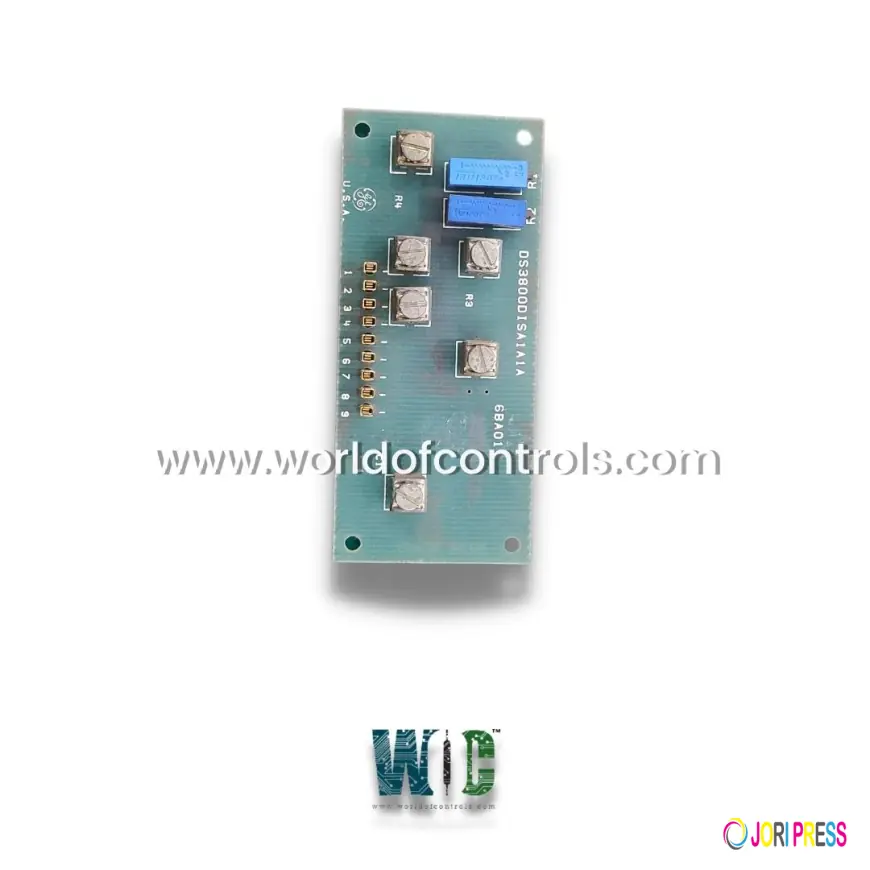
GE Signal ISO AUX technology refers to auxiliary signal isolation modules used within GE turbine control systems. These modules act as an interface layer, allowing control signals to pass between subsystems while preventing direct electrical coupling. By isolating signals, the technology protects control hardware from voltage surges, noise, and ground loop issues that can disrupt turbine operations.
Isolation is typically achieved using opto-isolators or transformer-based circuits. These components transmit signal information without sharing a common electrical ground, ensuring stable and predictable system behavior even in demanding industrial conditions.
Role in GE Turbine Control Systems
In GE turbine control architectures, Signal ISO AUX modules are positioned between field-level instrumentation and the main control processors. Their primary role is not to perform logic or control decisions, but to condition and safeguard incoming and outgoing signals.
Within turbine control cabinets, these auxiliary boards support communication between sensors, actuators, and the central control system. By filtering electrical disturbances, they help maintain consistent signal quality, which is essential for turbine speed control, temperature regulation, alarm handling, and protection functions.
Importance of Signal Isolation in Turbine Operations
Signal isolation is a foundational requirement in turbine systems due to several operational realities:
Electrical Noise and Interference
Turbines generate significant electromagnetic interference through high-power switching devices, generators, and auxiliary equipment. Isolation prevents this noise from corrupting low-level control signals.
Grounding and Voltage Differences
Large industrial sites often experience ground potential differences. Isolated signals prevent unwanted current flow between subsystems, reducing the risk of measurement errors or hardware damage.
Safety and Protection
Clean and isolated signals ensure that protective functions—such as overspeed trips or temperature alarms—operate accurately and reliably when needed most.
Operational Benefits of GE Signal ISO AUX Technology
The use of Signal ISO AUX technology delivers tangible benefits across turbine lifecycle stages:
-
Improved reliability: Reduced signal distortion minimizes false alarms and unplanned shutdowns.
-
Enhanced equipment protection: Sensitive electronics are shielded from voltage spikes and transient faults.
-
Accurate control performance: Stable signal transmission supports precise turbine regulation and monitoring.
-
Lower maintenance impact: Fewer electrical faults translate into reduced troubleshooting time and downtime.
These advantages are especially valuable in base-load and critical power generation applications, where turbine availability directly affects operational efficiency and revenue.
Maintenance and Long-Term System Support
Many GE turbine installations continue to operate for decades, making long-term maintainability a key consideration. Signal ISO AUX modules are often inspected or replaced during preventive maintenance, system upgrades, or fault isolation activities.
A clear understanding of their function helps engineers quickly identify signal-related issues and maintain compatibility with existing control infrastructure. As turbines are modernized, signal isolation remains an essential design principle, even when newer digital platforms are introduced.
Conclusion
GE Signal ISO AUX technology plays a vital role in ensuring the reliability, safety, and performance of turbine control systems. By electrically isolating critical signals, it protects control electronics from interference and environmental stresses inherent to turbine operations. As a quiet but essential component of GE turbine architectures, Signal ISO AUX technology continues to support accurate control, dependable protection, and long-term system stability in the power generation industry.
What's Your Reaction?
 Like
0
Like
0
 Dislike
0
Dislike
0
 Love
0
Love
0
 Funny
0
Funny
0
 Angry
0
Angry
0
 Sad
0
Sad
0
 Wow
0
Wow
0