




































Cloud ERP Solutions and the Rise of Predictive Planning in Modern Supply Chains
Explore how cloud ERP solutions enable predictive planning, demand sensing, and supply optimization with Grow with SAP and SAP S/4HANA Cloud Solutions. https://geschaftindia.com/cloud-erp-solutions-in-2026-the-features-that-will-define-the-next-decade-of-operations/

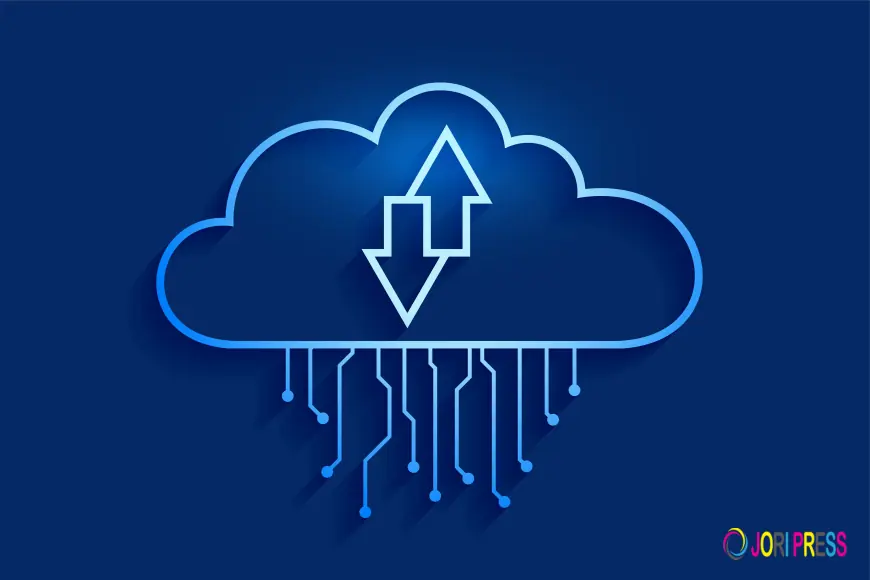
Supply chains are entering a predictive era in which planning relies on continuous signals rather than static forecasts. Volatile markets, fragmented demand patterns, and complex sourcing networks require enterprises to plan through uncertainty rather than against it. Traditional planning cycles assumed that demand could be forecasted quarterly or monthly. Execution systems were expected to follow the plan with minimal deviation. Modern supply chains cannot sustain this structure. Variability must be sensed earlier, and adjustments must be executed faster. Cloud erp solutions provide the digital foundation for predictive planning by integrating operational data, forecasting signals, and decision workflows into a single environment.
Predictive planning is not simply algorithmic forecasting. It is a coordination discipline across sales, supply chain, production, procurement, and logistics. Enterprises must synchronize sales expectations with production capacity, inventory buffers, supplier lead times, and transportation constraints. Cloud ERP platforms support this synchronization through real time data models and unified planning workflows. Predictive planning becomes scalable because planning engines operate on a consistent and current dataset rather than stale exports and manual spreadsheets.
Why Planning Needs a Cloud-Native Architecture
Planning requires speed and context. Speed ensures that forecasts, scenarios, and adjustments occur before execution windows expire. Context ensures that decisions reflect operational constraints such as material availability, shift patterns, routing, and customer service levels. Traditional ERP systems struggled to provide both. Forecast engines were decoupled from operations, and updated plans required manual reconciliation. Cloud erp solutions eliminate this gap by enabling planning engines to operate on transactional datasets without extraction delays.
Cloud architectures also support elasticity. Planning engines consume computational resources during peak cycles such as demand sensing or scenario simulation. Cloud platforms scale automatically, allowing enterprises to execute simulations without investing in fixed infrastructure.
How Grow with SAP Strengthens Planning Discipline
Predictive planning depends on consistent master data. Product hierarchies, lead times, BOM structures, and cost models must be standardized across plants and business units. Grow with SAP reinforces this through configuration-driven templates that reduce custom variation. Standardization improves planning accuracy and accelerates multi-plant coordination.
Planning also requires governance. Who approves forecast changes? When should safety stock rules be adjusted? How should demand overrides be tracked? Grow with SAP provides structured workflows for approvals and auditability, reducing the risk of uncoordinated adjustments that degrade supply performance.
SAP S/4HANA Cloud Solutions and Demand Sensing
SAP S/4HANA Cloud Solutions extend planning capabilities into demand sensing. Instead of relying exclusively on statistical forecasts, demand sensing incorporates short-term consumption signals, order patterns, and channel demand. Real time demand sensing is especially useful for volatile markets such as consumer goods, electronics, and seasonal industries.
Demand sensing becomes more accurate when planning engines operate on unified transactional data. Forecast adjustments reflect actual shipments, cancellations, returns, and channel performance. SAP S/4HANA Cloud Solutions support this through in memory computation and embedded analytics.
Sap cloud erp system and Predictive Supply Synchronization
Predictive supply integrates production, procurement, and inventory. A sap cloud erp system supports predictive supply by linking demand signals with supplier lead times, planned orders, and inventory buffers. Planning engines simulate how shifts in demand affect raw materials and capacity.
Predictive supply improves resilience. When supplier delays occur, planners evaluate alternate sourcing or capacity shifts. Traditional planning architectures responded reactively. Cloud ERP platforms enable proactive mitigation.
Cloud erp software india and Planning Transformation for Indian Enterprises
cloud erp software india supports predictive planning as Indian enterprises expand across multi-plant manufacturing, export distribution, and omni-channel retail. Variability across demand peaks such as festive seasons or e-commerce sales requires rapid forecast adjustments.
India’s supply chains depend on both local and global sourcing. Predictive planning improves sourcing flexibility by simulating lead time variability and landed cost scenarios. Cloud ERP architectures support these simulations without manual data preparation.
Demand-Driven MRP and Inventory Optimization
Demand-driven MRP (DDMRP) represents a significant shift in planning methodology. Instead of pushing production based on forecasts, DDMRP positions inventory buffers strategically and adjusts execution based on demand signals. Cloud erp solutions support DDMRP through buffer calculations, net flow equations, and prioritized replenishment signals.
Inventory optimization becomes structural rather than reactive. Enterprises evaluate where inventory should be positioned, how much should be buffered, and how replenishment should be triggered. SAP S/4HANA Cloud Solutions provide embedded analytics for inventory turns, coverage, and carrying cost.
Scenario Simulation and Decision Analytics
Scenario simulation is a critical capability for predictive planning. Enterprises must evaluate how demand shifts affect production schedules, supplier constraints, and cost outcomes. Simulations require accurate and consistent data across planning and execution.
Cloud ERP platforms eliminate reconciliation delays by allowing simulations to execute on live operational models. SAP S/4HANA Cloud Solutions accelerate scenario computation through in memory technology without exporting datasets to external tools.
Planning and Financial Synchronization
Predictive planning must align with financial outcomes. Production adjustments influence cost absorption, working capital, and cash conversion cycles. Cloud erp solutions integrate planning with finance through unified costing and profitability models.
Financial synchronization supports operational decision making. Enterprises evaluate the financial impact of expedite orders, alternate sourcing, or capacity changes. Finance gains visibility into forecasted variances rather than reporting them retroactively.
AI and Machine Learning as Planning Enhancers
Predictive planning benefits from machine learning models that analyze patterns across consumption, seasonality, promotions, and macroeconomic variables. Cloud architectures enable AI models to operate alongside transactional data. AI becomes an enhancer rather than an external tool.
Enterprises evaluate forecast overrides based on confidence intervals, anomaly detection, and regression patterns. Machine learning also assists with demand segmentation and service level optimization.
Procurement Alignment and Supplier Collaboration
Procurement must operate in tandem with planning. Predictive planning provides procurement with lead time visibility, forecasted consumption, and sourcing priorities. Supplier collaboration improves because purchase order signals become more predictable and accurate.
Cloud ERP platforms support supplier collaboration through shared portals, ASN processes, and visibility workflows. Predictability strengthens supplier reliability and reduces expedite costs.
Closing Perspective
Predictive planning marks a fundamental advance in supply chain strategy. Cloud erp solutions provide the digital platform for unified planning, scenario simulation, demand sensing, and financial synchronization. Grow with SAP reinforces standardization and governance. SAP S/4HANA Cloud Solutions enable in memory forecasting, DDMRP, and real time analytics. As predictive planning expands across global and Indian enterprises, cloud ERP platforms will define the new planning discipline built around speed, coordination, and resilience.
Frequently Asked Questions
1. How do Cloud erp solutions support predictive planning?
Cloud erp solutions unify forecasting, scenario simulation, and execution data to support real time demand and supply planning.
2. What role does Grow with SAP play in planning?
Grow with SAP standardizes master data and workflows, improving planning accuracy and multi-plant coordination.
3. How do SAP S/4HANA Cloud Solutions enable demand sensing?
SAP S/4HANA Cloud Solutions use in memory processing and unified data models to adjust forecasts based on short-term consumption signals.
4. Why is a sap cloud erp system relevant for predictive supply?
A sap cloud erp system connects demand, inventory, procurement, and capacity, allowing planners to anticipate constraints and simulate scenarios.
5. How does cloud erp software india support planning in India?
cloud erp software india improves forecasting, sourcing flexibility, and multi-channel distribution for Indian manufacturing and retail markets.
What's Your Reaction?
 Like
0
Like
0
 Dislike
0
Dislike
0
 Love
0
Love
0
 Funny
0
Funny
0
 Angry
0
Angry
0
 Sad
0
Sad
0
 Wow
0
Wow
0