The Augmented Reality (AR) Glasses Market is undergoing a transformative phase, shaped by rapid technological progress, evolving user expectations, and expanding real-world applications. AR glasses, which superimpose digital information onto the user’s physical environment, are moving beyond experimental devices into practical tools for both enterprises and consumers. Several prominent trends are defining the current landscape and shaping the future trajectory of this dynamic market.
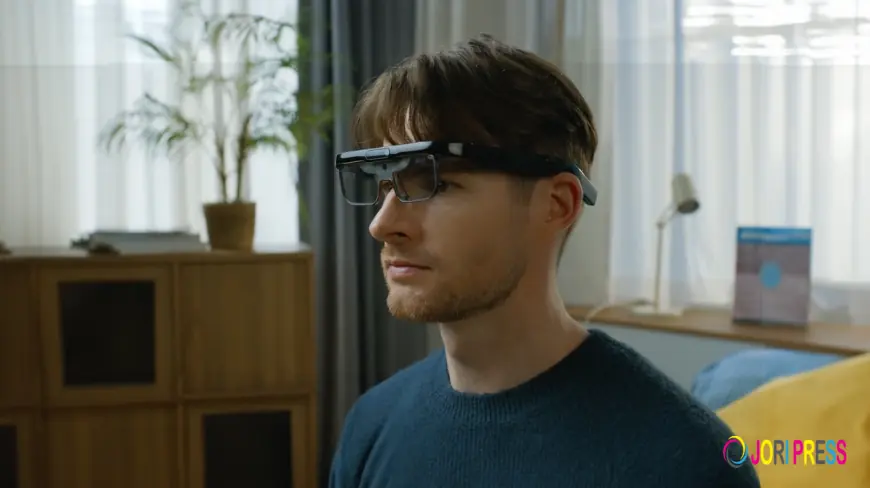
One of the most visible trends is the shift toward lightweight, stylish, and ergonomically refined designs. Early AR headsets were bulky and uncomfortable, limiting long-term use and social acceptance. Manufacturers are now prioritizing sleek form factors that resemble conventional eyewear, making devices suitable for everyday wear. Advances in materials science, miniaturized components, and optical engineering are enabling thinner frames and balanced weight distribution. This evolution is crucial because user comfort and aesthetics strongly influence consumer adoption, particularly outside industrial environments.
Another major trend is the integration of advanced display technologies. Innovations such as micro-LED panels, laser beam scanning, and waveguide optics are dramatically improving brightness, resolution, and field of view while reducing power consumption. These enhancements allow digital overlays to appear more natural and easier to read in varying lighting conditions, including outdoors. Improved visual quality also supports more complex applications, from detailed technical instructions to immersive entertainment experiences.
Artificial intelligence is increasingly embedded into AR glasses, enabling smarter and more context-aware interactions. AI-driven features such as real-time object recognition, scene understanding, and natural language processing allow devices to deliver relevant information without manual input. For example, glasses can identify machinery components during maintenance, translate text instantly, or provide contextual prompts based on what the user is viewing. Voice assistants and gesture recognition further streamline interaction, reducing reliance on external controllers or touch interfaces.
Connectivity advancements represent another defining trend. The expansion of high-speed wireless networks, particularly 5G, is enabling cloud-based AR experiences with minimal latency. Instead of relying solely on onboard processing, AR glasses can offload complex computations to edge or cloud servers, allowing for lighter hardware and longer battery life. This connected approach supports real-time collaboration, remote guidance, and data streaming, which are especially valuable for enterprise deployments across distributed workforces.
Enterprise adoption continues to outpace consumer uptake, making industrial use cases a central trend in the market. Sectors such as manufacturing, logistics, energy, and construction are deploying AR glasses to enhance operational efficiency. Workers can access digital work instructions, safety alerts, and performance metrics directly within their field of view. Remote experts can also guide on-site personnel through complex procedures using live annotations. This reduces training time, minimizes errors, and improves overall productivity, making AR glasses a strategic tool for digital transformation initiatives.
Healthcare applications are also gaining momentum. Medical professionals are exploring AR glasses for surgical navigation, patient monitoring, and medical training. Surgeons can view imaging data overlaid on the patient during procedures, improving precision and situational awareness. In medical education, AR simulations provide immersive learning experiences without the need for physical cadavers or high-risk scenarios. Additionally, telemedicine solutions using AR glasses enable remote specialists to assist frontline clinicians in real time, expanding access to expert care.
Consumer-oriented trends are increasingly focused on everyday utility rather than novelty. Navigation overlays, real-time language translation, notifications, and hands-free communication are among the features attracting mainstream users. Integration with smartphones and digital ecosystems allows AR glasses to function as an extension of existing devices, delivering information discreetly and conveniently. Entertainment applications, including interactive gaming and immersive media viewing, are also evolving to leverage spatial awareness without isolating users from their surroundings.
Battery efficiency and power management improvements are another critical trend. Since AR glasses must remain lightweight, large batteries are impractical. Manufacturers are therefore optimizing software, display technologies, and processing methods to extend usage time without increasing device size. Some designs incorporate modular components or external compute units to balance performance with wearability.
Privacy and data security considerations are shaping product development as well. Concerns about cameras, facial recognition, and continuous data capture have prompted companies to implement visible recording indicators, on-device processing, and user-controlled permissions. Regulatory frameworks and public awareness are influencing how features are designed and marketed. Addressing privacy concerns is essential for widespread acceptance, particularly in public spaces and workplaces.
Another notable trend is the emergence of specialized industry solutions rather than one-size-fits-all devices. Vendors are tailoring AR glasses for specific applications such as warehouse picking, field maintenance, medical procedures, or retail assistance. These purpose-built solutions often include customized software platforms, ruggedized hardware, and integration with enterprise systems. This vertical approach accelerates return on investment for organizations by addressing concrete operational needs.
Collaboration between technology companies, software developers, and content creators is expanding the AR ecosystem. Robust developer platforms and application marketplaces are essential for unlocking the full potential of AR glasses. As more developers create innovative use cases, the value proposition of owning such devices increases. Interoperability with other emerging technologies — including Internet of Things (IoT) sensors and digital twins — further enhances functionality by enabling real-time data visualization from connected systems.
Finally, the concept of spatial computing is emerging as a long-term trend that positions AR glasses as a primary computing interface. Instead of interacting with flat screens, users engage with digital content anchored in physical space. Virtual monitors, interactive holograms, and context-aware interfaces could eventually reduce dependence on smartphones, tablets, and traditional computers for many tasks.
In conclusion, the Augmented Reality Glasses Market is evolving through a combination of design refinement, technological breakthroughs, enterprise adoption, and expanding consumer use cases. Trends such as AI integration, advanced displays, cloud connectivity, privacy-focused design, and specialized industry solutions are reshaping how these devices are developed and deployed. As AR glasses become more practical, comfortable, and intelligent, they are poised to transition from niche tools into mainstream platforms that fundamentally change how people interact with digital information in the physical world.









































 Like
0
Like
0
 Dislike
0
Dislike
0
 Love
0
Love
0
 Funny
0
Funny
0
 Angry
0
Angry
0
 Sad
0
Sad
0
 Wow
0
Wow
0