



































A Complete Workflow for DigiLocker Issuance Integration: How Businesses Can Automate Document Verification

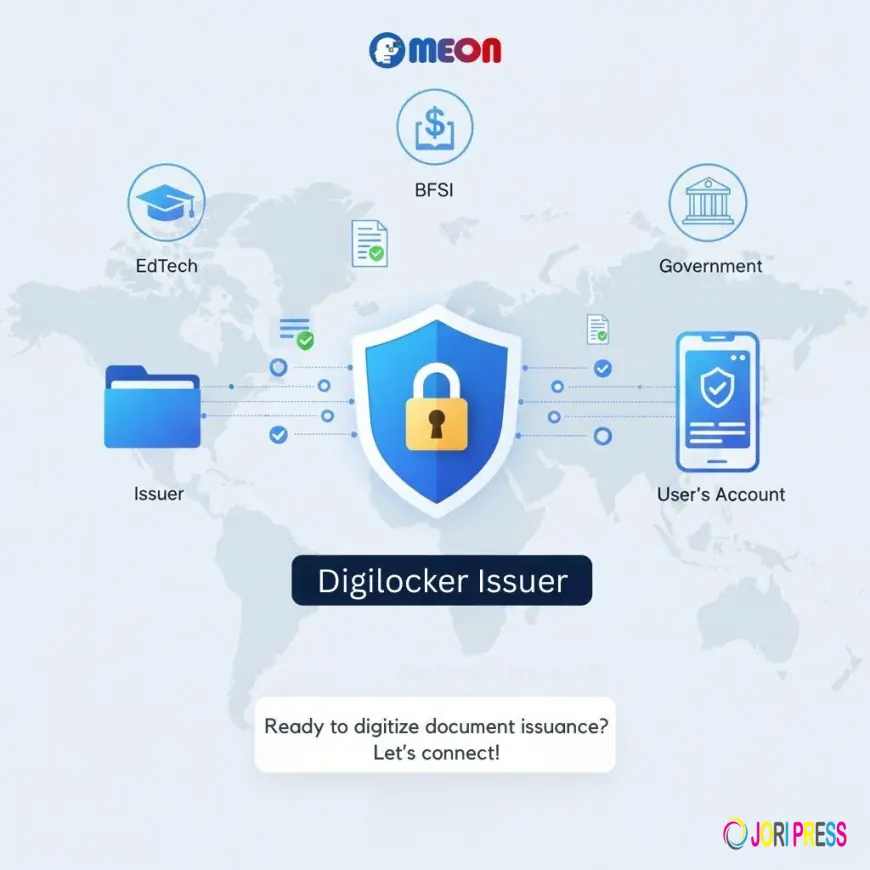
As digital transformation accelerates across India, businesses are increasingly moving toward automated verification systems to improve speed, reduce manual effort, and enhance security. One of the most powerful tools enabling this shift is DigiLocker Issuance Integration, a secure and government-approved mechanism that allows organizations to issue verified documents directly to a user’s DigiLocker account. From BFSI to mobility, EdTech, HRMS, and public-sector services, the adoption of DigiLocker Issuance Integration has become essential for delivering frictionless and compliant user onboarding experiences.
In this guide, we break down the complete workflow of DigiLocker Issuance Integration, explain how businesses can automate document verification end-to-end, and highlight how technology providers like meon technologies enable seamless implementation.
What Is DigiLocker Issuance Integration?
DigiLocker Issuance Integration is the process through which organizations connect their internal systems with the DigiLocker platform to digitally issue documents—such as certificates, IDs, statements, licenses, and reports—directly to a user’s secure cloud locker. Every document issued through this workflow carries a government-verified digital signature, making it legally valid and tamper-proof.
Businesses that rely on identity, compliance, or document-based validation can drastically reduce paperwork and manual checks by using DigiLocker Issuance Integration.
Why Businesses Need DigiLocker Issuance Integration
The benefits go far beyond convenience. Companies implementing DigiLocker Issuance Integration gain:
1. Fully Automated Verification
Documents issued via DigiLocker require no manual verification, because every file is already authenticated by government standards.
2. Faster Customer Onboarding
With instant issuance and retrieval, businesses reduce onboarding time from days to minutes.
3. Compliance Alignment
Since DigiLocker is a Digital India initiative, DigiLocker Issuance Integration automatically adheres to regulatory requirements for data security and document integrity.
4. Reduced Fraud Cases
Digitally signed documents make forgery nearly impossible, significantly lowering verification risk.
5. Cost Savings
Removing the need for scanning, manual review, and physical storage brings down operational overhead.
A Step-By-Step Workflow: How DigiLocker Issuance Integration Works
Here is a detailed breakdown of the complete process businesses follow when implementing DigiLocker Issuance Integration.
Step 1: Organisation Onboarding on DigiLocker
The business registers itself as an issuer on the DigiLocker platform. This includes:
-
Submitting organization details
-
Documenting the types of documents to be issued
-
Registering metadata & access endpoints
-
Completing approval and sandbox verification
Once onboarding is successful, the business can officially issue documents using DigiLocker Issuance Integration.
Step 2: Setting Up the Issuer APIs
DigiLocker provides secure API endpoints that allow issuers to:
-
Authenticate users
-
Push documents
-
Manage document metadata
-
Track issuance logs
Developers integrate these APIs into internal systems. Providers like meon technologies assist in building a scalable and secure API layer customized for enterprise needs.
Step 3: User Consent & Authentication
Before issuing any document, the user must:
-
Give consent
-
Authenticate via DigiLocker OTP or Aadhaar eKYC
This consent-driven design ensures user privacy and meets data protection norms.
Step 4: Document Preparation & Digital Signing
The issuing system generates the required document (PDF/XML/JSON) and ensures compliance with DigiLocker’s metadata structure.
The document is then digitally signed by the issuer, making it legally authentic.
At this stage, DigiLocker Issuance Integration ensures the document follows:
-
Digital signature format
-
Proper schema tagging
-
File security standards
-
Issuer identification metadata
Step 5: Document Push to DigiLocker
Once the document is ready, it is pushed using the Issuance API.
The platform then:
-
Stores the document in the user’s DigiLocker
-
Sends the user a notification
-
Updates the issuer dashboard with an issuance status
Every document issued through DigiLocker Issuance Integration becomes instantly verifiable by any partner relying on DigiLocker pulls or fetch APIs.
Step 6: Automated Verification by Third-Party Platforms
Because documents issued via DigiLocker include government-grade digital signatures, the verification becomes automatic and instant.
Businesses can integrate DigiLocker Pull APIs to fetch and validate documents such as:
-
Aadhaar-based KYC documents
-
Driving licenses
-
Vehicle registration certificates
-
Education certificates
-
Policy documents
-
Bank statements
-
Employee records
This full automation drastically reduces manual verification workloads.
Step 7: Logging, Auditing & Compliance Tracking
Every issuance request is logged with:
-
Timestamp
-
Document type
-
User ID token
-
Issuance status
-
Error codes, if any
These logs ensure compliance with government mandates and make audits easier.
How DigiLocker Issuance Integration Helps Different Industries
1. BFSI (Banks, Fintechs, NBFCs)
Automates KYC, loan processing, account opening, policy issuance, and verification.
2. Mobility & Transport
Digital issuance of vehicle RCs, permits, transport IDs, and automation of driver onboarding.
3. EdTech & Universities
Instant issuance of marksheets, certificates, transcripts, and student IDs using DigiLocker Issuance Integration.
4. HR & Workforce Platforms
Issue employee ID cards, onboarding documents, and verification certificates directly to DigiLocker.
5. Insurance Companies
Issue digital policies instantly with secure authentication.
Best Practices for DigiLocker Issuance Integration
To ensure smooth implementation, businesses should:
✔ Maintain Proper Document Metadata
Align with DigiLocker’s schema for better compatibility and faster validation.
✔ Use Secure API Gateway
API gateway layers by solutions like meon technologies ensure encryption, rate limiting, and secure access control.
✔ Test Thoroughly in Sandbox
Validate signature formats, metadata, and API connectivity before production.
✔ Automate Error Handling
Prepare fallback flows for common errors—invalid consent, signature mismatch, or schema issues.
✔ Ensure User Awareness
Educate users on how issued documents will appear in their DigiLocker accounts.
Why Choose meon technologies for DigiLocker Issuance Integration?
meon technologies offers a unified API stack that simplifies DigiLocker onboarding, issuance, and verification workflows. With ready-to-deploy integrations, secure authentication layers, and enterprise-grade scalability, businesses can reduce development time and implement DigiLocker Issuance Integration faster with minimal complexity.
Conclusion
Automating document verification is no longer optional—it's a competitive necessity. DigiLocker Issuance Integration enables organizations to issue secure, verified, tamper-proof documents instantly while also reducing manual work, operational costs, and fraud. Whether you operate in finance, education, mobility, HR, or insurance, implementing this workflow delivers a seamless, compliant, and efficient digital experience.
Businesses that adopt a strategic approach to DigiLocker Issuance Integration position themselves for long-term digital success—especially with reliable technology partners like meon technologies enabling secure and scalable automation.
What's Your Reaction?
 Like
0
Like
0
 Dislike
0
Dislike
0
 Love
0
Love
0
 Funny
0
Funny
0
 Angry
0
Angry
0
 Sad
0
Sad
0
 Wow
0
Wow
0