






























A Clear Look at How Real-World Assets Are Being Invested in Differently Today
RWA Tokenization is changing the way people think about ownership, value, and access to real-world assets. Not long ago, investing in physical assets followed a familiar path: slow, paperwork-heavy, and often limited to a select few.

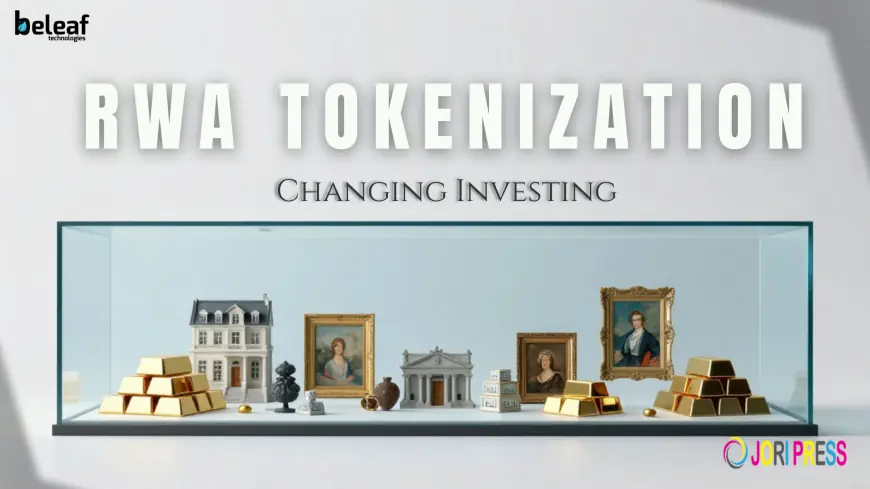
Table of Contents
When investing felt personal, but limited
Why traditional real-world asset investing needed change
Understanding RWA Tokenization in simple terms
How real-world assets are being invested in differently today
The role of technology in building trust and access
Why RWA tokenization appeals to modern investors
Challenges and responsible adoption
Final Thoughts
When investing felt personal, but limited
There was a time when investing meant something tangible and deeply personal. Families invested in land, gold, buildings, or businesses they could see and touch. These assets weren’t just numbers on a screen; they carried stories, effort, and long-term hopes. But for many people, participation came with boundaries. High capital requirements, complicated legal processes, and geographical limitations meant that only certain investors could access these opportunities. A promising property in another city or a valuable commodity stored in a distant vault often stayed out of reach. As financial markets became more digital and fast-paced, this gap only became more apparent. The desire to invest remained strong but the system didn’t evolve at the same speed as investor expectations.
Why traditional real-world asset investing needed change
Real-world assets such as real estate, commodities, art, and infrastructure hold long-term value. Yet they are typically illiquid, difficult to divide, and complex to manage. Buying an asset often meant committing significant capital and remaining locked in for years. Transparency was another challenge. Investors relied on intermediaries for valuation, ownership records, and transactions. Selling an asset could take months, sometimes years. These frictions discouraged participation, especially from younger and digitally savvy investors who were used to efficiency and flexibility. What was missing was not value—but accessibility.
Understanding RWA Tokenization in simple terms
RWA tokenization refers to the process of converting real-world assets into digital tokens using blockchain technology. Each token represents a fractional or full ownership stake in a physical asset, backed by legal and operational frameworks. Instead of owning an entire building or commodity, investors can now own a portion securely recorded on a blockchain. This approach does not remove the physical asset; it enhances how ownership is represented, transferred, and managed. At its core, asset tokenisation combines the reliability of real-world value with the efficiency of digital infrastructure.
How real-world assets are being invested in differently today
-
Tokenized real-world assets are reshaping traditional investment structures.
-
Fractional ownership allows smaller investments, enabling diversification without overexposure.
-
Digital records reduce paperwork and improve transparency.
-
Transactions that once took weeks can now settle faster and more efficiently.
-
Blockchain-based investments also introduce traceability.
-
Ownership history, asset backing, and transaction data are clearly recorded, helping investors make informed decisions.
-
For institutions, this improves compliance and reporting.
-
For individuals, it builds confidence.
-
The investment experience becomes simpler, clearer, and more aligned with modern expectations.
The role of technology in building trust and access
Technology plays a critical role in ensuring that tokenized assets remain trustworthy. Smart contracts automate processes such as issuance, transfers, and compliance checks. Independent audits verify asset backing, while secure custody solutions protect physical assets. This layered approach reduces reliance on intermediaries and minimizes operational risks. Investors gain visibility into what they own and how it is managed, something that was often unclear in traditional systems. Trust is no longer built only on reputation; it is reinforced by transparent systems.
Why RWA tokenization appeals to modern investors
Today’s investors seek balance between stability and innovation, between long-term value and flexibility. Tokenized assets offer that balance. They provide exposure to tangible assets while fitting seamlessly into digital portfolios. For retail investors, this opens doors previously closed. For businesses and institutions, it creates opportunities to optimize capital, improve liquidity, and reach broader markets. The appeal lies not in replacing traditional investing, but in improving how it works. RWA tokenization aligns investment strategies with a global, connected economy.
Challenges and responsible adoption
Like any evolving system, tokenization comes with considerations. Regulatory clarity, asset valuation standards, and investor education are essential. Strong governance, transparency, and compliance must remain central to adoption. Responsible platforms focus on long-term value rather than short-term hype. As frameworks mature, the ecosystem becomes more resilient benefiting investors and markets alike.
Final Thoughts
The way people invest in RWA Tokenization is quietly transforming. What once felt exclusive now feels approachable. What once required complexity is becoming clearer. And what once moved slowly is finding a rhythm that matches today’s world. RWA still matters. What’s changing is how people connect with them. Through thoughtful use of technology, investing is becoming more inclusive, more transparent, and more aligned with the future investors envision for themselves. Sometimes progress is not about doing something entirely new but about finally making something valuable easier to share, understand, and grow with.
What's Your Reaction?
 Like
0
Like
0
 Dislike
0
Dislike
0
 Love
0
Love
0
 Funny
0
Funny
0
 Angry
0
Angry
0
 Sad
0
Sad
0
 Wow
0
Wow
0