




























Understanding OHSS: Risks and Modern Solutions in IVF
Learn about OHSS risks, symptoms, and prevention in IVF. Discover safer protocols and how to choose the best IVF treatment in Delhi.
Introduction
If you’re exploring IVF, you’ve probably heard a mix of hopeful success stories and a few scary medical terms. One of those terms is OHSS—short for Ovarian Hyperstimulation Syndrome. Sounds intimidating, right? Don’t worry. Think of OHSS like watering a plant: a little water helps it grow, but too much can flood the roots. IVF works in a similar way—stimulating the ovaries helps eggs grow, but over-stimulation can cause problems.
The good news? Modern IVF has evolved. With smarter protocols, careful monitoring, and personalized care, OHSS is far less common and far more manageable today—especially when you choose the best IVF treatment in Delhi Let’s break it all down in simple, human language.
Learn about OHSS risks, symptoms, and prevention in IVF. Discover safer protocols and how to choose the best IVF treatment in Delhi
. What Is OHSS? A Simple Explanation
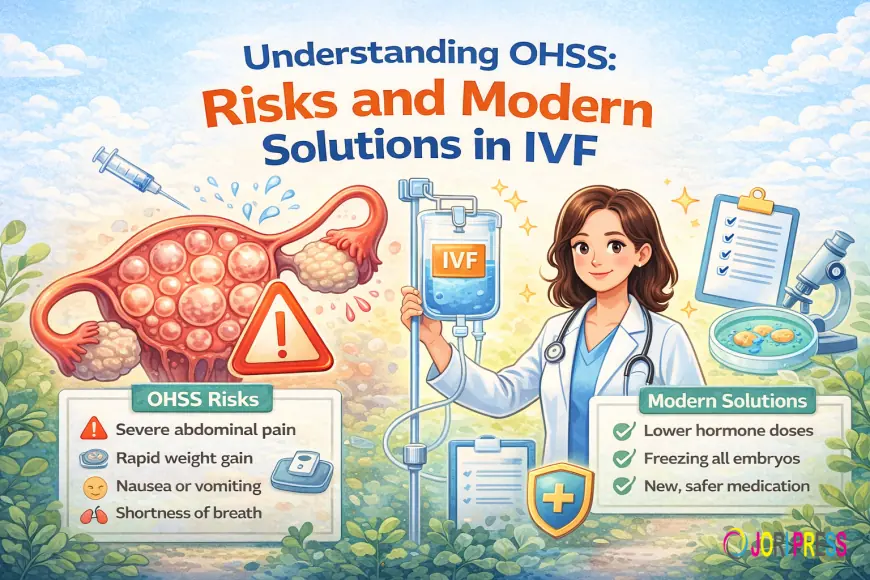
OHSS happens when the ovaries respond too strongly to fertility medicines. Instead of maturing a few eggs, the ovaries produce many follicles and become swollen. Fluid may leak into the abdomen, causing discomfort.
Key point: Mild OHSS is common and usually settles on its own. Severe OHSS is rare-- but needs medical care.
2. Why Does OHSS Happen During IVF?
IVF uses hormone injections to help ovaries grow multiple eggs. Sometimes, the body reacts extra enthusiastically. Blood vessels become leaky, fluid shifts occur, and symptoms begin.
Think of it like turning the volume knob too high-- great sound at first, but suddenly overwhelming.
3. Who Is More at Risk of OHSS?
Some people are naturally more sensitive to stimulation.
Higher risk factors include:
PCOS (Polycystic Ovary Syndrome).
Young age.
High AMH levels.
Low body weight.
Previous OHSS.
A good clinic screens for these factors early-- this is where choosing the best IVF treatment in Delhi truly matters.
4. Early vs Severe OHSS: What's the Difference?
Early OHSS appears soon after egg retrieval due to hormone response.
Late OHSS may occur after pregnancy hormones rise.
Severe OHSS may include:.
Severe abdominal swelling.
Breathing difficulty.
Reduced urine output.
Don't panic-- this is rare with modern care.
5. Common Symptoms You Should Never Ignore.
Listen to your body. It whispers before it shouts.
Watch out for:.
Bloating or abdominal pain.
Nausea or vomiting.
Rapid weight gain (more than 2 kg in 24 hours).
Shortness of breath.
Early reporting helps prevent complications.
6. How Doctors Diagnose OHSS.
Diagnosis is usually straightforward:.
Clinical symptoms.
Ultrasound to check ovarian size and fluid.
Blood tests for concentration changes.
Frequent monitoring is a hallmark of safe IVF programs.
7. Why OHSS Used to Be More Common in the Past.
Years ago, IVF followed one-size-fits-all protocols. High hormone doses were common, and monitoring tools were limited. Today? IVF is smarter, gentler, and personalized.
8. Modern IVF Protocols That Reduce OHSS Risk.
Today's clinics use:.
Lower-dose stimulation.
GnRH antagonist protocols.
Safer trigger injections.
These advances have dramatically reduced OHSS rates.
9. Role of Individualized Hormone Dosing.
No two bodies are the same. Personalized dosing adjusts medicines based on:.
Age.
Hormone levels.
Ovarian response.
This tailored approach is standard at centers offering the best IVF treatment in Delhi.
10. Freeze-All Strategy: A Game Changer.
Instead of fresh embryo transfer, doctors may:.
Freeze all embryos.
Allow the body to recover.
Transfer embryos later in a calm hormonal environment.
This strategy almost eliminates severe OHSS risk.
11. How Lifestyle and Self-Care Help Recovery.
If mild OHSS occurs:.
Drink fluids with electrolytes.
Eat protein-rich foods.
Rest, but keep light movement.
Avoid strenuous activity.
Your body is healing-- treat it kindly.
12. When OHSS Needs Hospital Care.
Hospitalization may be needed if:.
Pain is severe.
Breathing is affected.
Urine output drops.
Treatment includes fluids, monitoring, and supportive care. Most patients recover fully.
13. Emotional Impact of OHSS During IVF.
Let's be honest-- IVF is emotional already. OHSS can add fear and frustration. Feeling anxious doesn't mean you're weak; it means you care.
Support, reassurance, and clear communication from your care team make all the difference.
14. Choosing the Best IVF Treatment in Delhi.
When selecting a clinic, look for:.
Transparent OHSS prevention protocols.
Experienced fertility specialists.
Advanced lab facilities.
Personalized treatment plans.
The best IVF treatment in Delhi focuses on safety first, success next.
15. Future of OHSS-Free IVF.
Research is moving toward:.
Even gentler stimulation.
Predictive AI-based dosing.
Patient-friendly IVF cycles.
The future looks safer-- and brighter.
Conclusion.
OHSS may sound scary, but knowledge is power. With modern IVF techniques, careful monitoring, and the right medical team, the risk is low and manageable. IVF today is not about pushing the body-- it's about working with it. When you choose the best IVF treatment in Delhi, you're choosing safety, science, and support-- together.
FAQs.
1. Is OHSS common in IVF today?
No. With modern protocols, severe OHSS is rare.
2. Can OHSS affect pregnancy success?
When managed well, most people go on to have successful pregnancies.
3. Is OHSS preventable?
Yes. Personalized stimulation and freeze-all strategies greatly reduce risk.
4. How long does OHSS take to recover?
Mild cases resolve in days; severe cases may take a few weeks with care.
5. Should I avoid IVF because of OHSS risk?
Not at all. Choosing the best IVF treatment in Delhi ensures safety and confidence.
What's Your Reaction?
 Like
0
Like
0
 Dislike
0
Dislike
0
 Love
0
Love
0
 Funny
0
Funny
0
 Angry
0
Angry
0
 Sad
0
Sad
0
 Wow
0
Wow
0