





































Shell and Tube Heat Exchanger: Reliable Thermal Solutions for Industrial Applications
A shell and tube heat exchanger is a mechanical device designed to transfer heat between two fluids while keeping them physically separated.

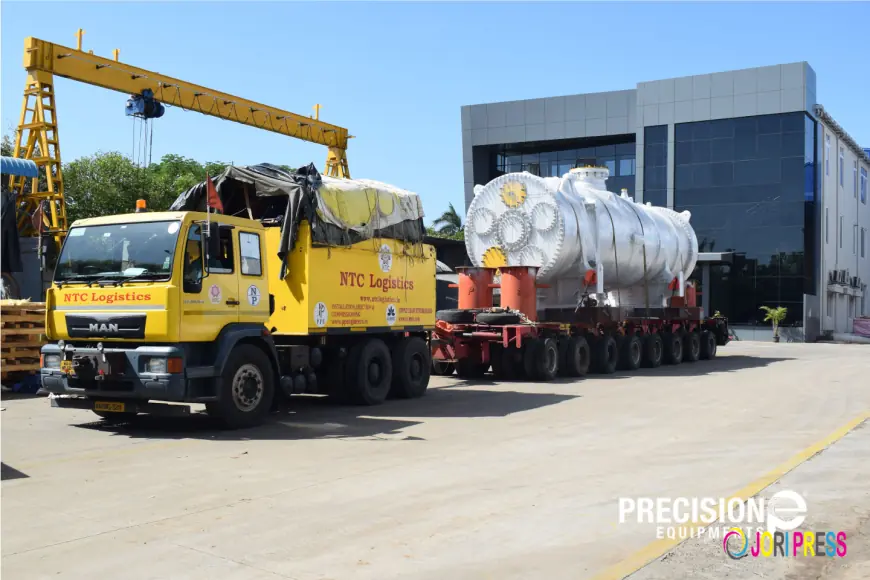
Efficient heat transfer is a critical requirement in modern industrial processes, directly influencing productivity, safety, and energy consumption. Among the various heat exchange systems available today, the Shell and Tube Heat Exchanger continues to be one of the most widely used and trusted solutions. Its robust design, operational flexibility, and ability to perform under extreme conditions make it an essential component across multiple industries.
What Is a Shell and Tube Heat Exchanger?
A shell and tube heat exchanger is a mechanical device designed to transfer heat between two fluids while keeping them physically separated. It consists of a cylindrical outer shell that houses a bundle of tubes. One fluid flows through the tubes, while the other flows around them inside the shell, allowing heat to transfer through the tube walls.
This design is especially suitable for high-pressure and high-temperature applications, making shell and tube heat exchangers ideal for demanding industrial environments.
Working Principle of Shell and Tube Heat Exchanger
The working principle of a shell and tube heat exchanger is based on efficient thermal conduction. One fluid enters the exchanger at a higher temperature, while the second fluid enters at a lower temperature. As both fluids flow through separate paths, heat energy moves from the hotter fluid to the cooler one through the tube material.
Depending on system requirements, flow arrangements such as counterflow, parallel flow, or crossflow can be used. Counterflow configurations are often preferred because they offer higher thermal efficiency and better temperature control.
Advantages of Shell and Tube Heat Exchanger
The widespread use of shell and tube heat exchangers is due to several key advantages:
-
High heat transfer efficiency for large thermal loads
-
Strong mechanical construction suitable for harsh operating conditions
-
Ability to handle high pressures and temperatures
-
Flexible design options for various industrial processes
-
Easy cleaning, inspection, and maintenance
-
Long service life with reliable performance
These benefits make the shell and tube heat exchanger a cost-effective and dependable solution for both continuous and batch operations.
Industrial Applications
Shell and tube heat exchangers are used in a wide range of industries due to their versatility and durability. Common applications include:
-
Oil and gas processing facilities
-
Chemical and petrochemical plants
-
Power generation stations
-
Pharmaceutical manufacturing units
-
Food and beverage processing industries
-
HVAC and refrigeration systems
In these applications, shell and tube heat exchangers function as heaters, coolers, condensers, or evaporators, depending on process requirements.
Design and Construction Excellence
The performance and durability of a shell and tube heat exchanger depend largely on precise engineering and high-quality construction. Precision Equipments manufactures shell and tube heat exchangers with a strong focus on dimensional accuracy, material integrity, and thermal efficiency. Key design parameters such as tube layout, shell diameter, baffle spacing, and flow configuration are carefully engineered to achieve optimal heat transfer with minimal pressure drop.
A wide range of materials including carbon steel, stainless steel, copper alloys, and corrosion-resistant metals are used to ensure compatibility with different process fluids. Advanced fabrication techniques and strict quality control measures help deliver heat exchangers that meet international standards and perform reliably in demanding industrial conditions.
Maintenance and Operational Efficiency
Regular maintenance is essential to ensure the long-term efficiency of a shell and tube heat exchanger. Over time, fouling and scaling can reduce heat transfer efficiency and increase pressure drop. Routine inspection, tube cleaning, and performance monitoring help prevent operational issues and extend equipment lifespan.
Well-maintained shell and tube heat exchangers contribute to improved energy efficiency, reduced downtime, and lower operating costs, making them a valuable asset for industrial operations.
Energy Efficiency and Sustainability
Shell and tube heat exchangers play an important role in energy conservation by enabling effective heat recovery and reuse. By transferring waste heat from one process to another, industries can reduce fuel consumption and minimize environmental impact. Their durable design and long service life also support sustainable industrial practices.
Conclusion
The Shell and Tube Heat Exchanger remains a reliable and efficient solution for industrial heat transfer needs. Its robust construction, adaptability, and proven performance make it suitable for a wide range of applications. With proper design, material selection, and routine maintenance, shell and tube heat exchangers deliver consistent thermal efficiency, operational stability, and long-term value for industrial processes.
What's Your Reaction?
 Like
0
Like
0
 Dislike
0
Dislike
0
 Love
0
Love
0
 Funny
0
Funny
0
 Angry
0
Angry
0
 Sad
0
Sad
0
 Wow
0
Wow
0