







































Navigating Urgent Garage Door Failures: A Homeowner’s Guide

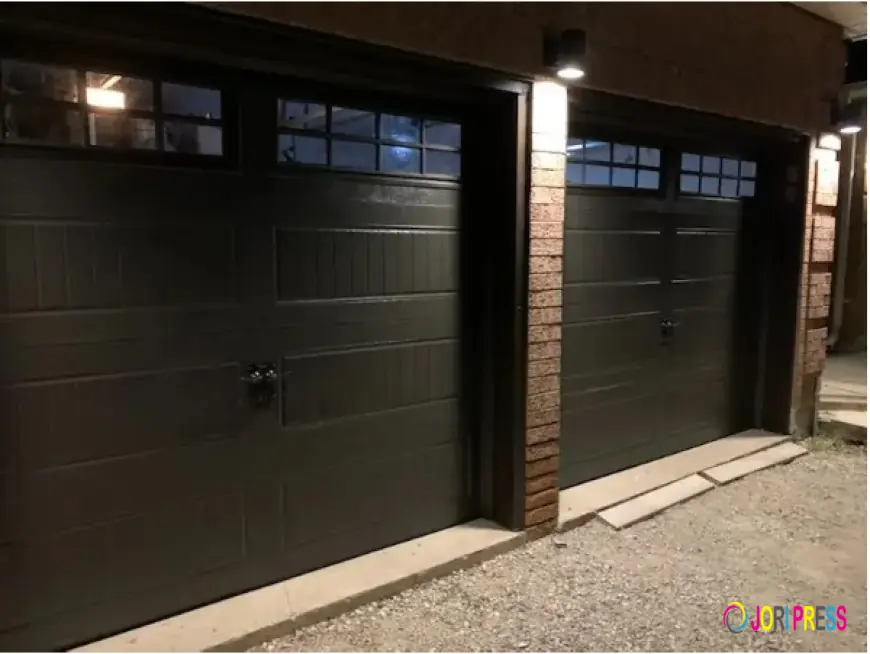
A garage door failure rarely happens at a convenient time. Usually, it occurs as you are backing out for a morning commute or returning home late at night during a winter storm. When a heavy steel door becomes stuck halfway or a torsion spring snaps with a thunderous crack, the security of your home and the safety of your family are immediately compromised. In these high-stress moments, securing a reliable Emergency Garage Door Repair Toronto service becomes the top priority to restore access and peace of mind. Understanding why these systems fail and how to manage the situation safely can prevent a frustrating mechanical issue from turning into a dangerous household accident.
The Anatomy of an Emergency Failure
To manage a garage door crisis, one must first understand the immense physical forces at play. Most modern residential doors weigh between 150 and 300 pounds, and they are held in suspension by high-tension springs. These springs act as the mechanical muscles of the system. When a spring breaks, the door essentially becomes a dead weight. If the door is open when the spring snaps, it can crash down with enough force to crush objects or cause severe injury. This is why a door that won't move or feels incredibly heavy is considered an immediate emergency rather than a minor inconvenience.
Beyond the springs, the cables and tracks serve as the skeletal structure. Cables are responsible for transferring the tension from the springs to the door itself. If a cable frays or slips off its drum, the door will often sit crookedly in the opening. Attempting to force a crooked door closed or open can bend the steel tracks, leading to a much more expensive structural repair. In an emergency scenario, the best course of action is to leave the door exactly where it is and avoid the temptation to "muscle" it into place, as this often causes the rollers to pop out of the tracks entirely.
Common Catalysts for Urgent Repairs
The unique climate of the Greater Toronto Area plays a significant role in the sudden failure of garage door components. Extreme temperature fluctuations cause metal to expand and contract, which is particularly taxing on the hardened steel used in torsion and extension springs. During a deep freeze, metal becomes more brittle. If a spring is already near the end of its 10,000-cycle lifespan, the added stress of a cold snap is often the final straw. Similarly, the road salt tracked in by vehicles can lead to "cable rot," where the bottom of the lifting cables corrodes and snaps without warning.
Another frequent cause for emergency calls is a malfunction in the electronic safety system. Modern doors rely on infrared sensors located near the floor to detect obstructions. If these sensors are bumped by a garbage can, misaligned by vibrations, or blocked by a buildup of snow and ice, the door will refuse to close. While this is a vital safety feature, it can leave a home exposed to the elements and intruders overnight. While some sensor issues can be fixed by a quick wipe of the lens, a blinking red light often indicates a wiring fault or a hardware failure that requires professional diagnostic tools to resolve.
Safety Protocols During a Breakdown
When a garage door malfunctions, the first instinct for many homeowners is to pull the emergency release cord, the red handle hanging from the opener track. While this is designed to allow manual operation, it should be handled with extreme caution. If the door is stuck in the "up" position and a spring has broken, pulling that cord will disconnect the door from the motor's braking system, potentially causing the door to free-fall. Only use the manual release if the door is fully closed or if you have a secondary person available to help support the weight of the door.
Furthermore, it is critical to keep children and pets away from the garage area until a technician arrives. A door that is off-balance or has a loose cable is unpredictable. It may seem stable one moment and shift the next. Avoid the "DIY" approach to spring replacement; these components store enough kinetic energy to be lethal if they are released incorrectly. Professional technicians use specialized winding bars and locking pliers to safely manage this tension, tools and techniques that the average homeowner does not have access to.
Protecting Your Investment Through Prevention
While emergency services are a lifesaver, the goal of every homeowner should be to minimize the frequency of these events. Most emergency repairs are the result of neglected "minor" issues that eventually cascaded into a total system failure. A door that has been squeaking for months is usually signaling that the rollers are seized. When a roller stops rolling and starts sliding, it creates friction that eventually burns out the motor of the garage door opener. Replacing a set of rollers is a fraction of the cost of replacing a burnt-out 1/2 horsepower motor.
A simple monthly visual inspection can go a long way. Check the cables for any signs of "meat-hooking" or fraying, and look at the springs for gaps in the coils, which indicates they are losing their elasticity. You should also listen for any change in the sound of the motor. A strained, grinding noise often means the door is out of balance. By addressing these small symptoms early, you can schedule a standard maintenance call on your own terms rather than being forced into an emergency repair at an inopportune hour.
Choosing the Right Service Partner
In an emergency, the speed of the response is important, but the quality of the technician is what ensures the problem doesn't recur the following week. A reputable service provider will not only fix the immediate break, such as a snapped cable, but will also perform a full safety inspection to identify why the part failed in the first place. For instance, if a cable snapped because the track was misaligned, simply replacing the cable is a temporary fix. A true professional aligns the entire system to ensure smooth operation for years to come.
Homeowners should look for services that offer transparent pricing and use high-cycle replacement parts. Many "builder-grade" springs are designed to last only five to seven years, whereas high-quality galvanized springs can last twice as long. Investing in premium parts during an emergency repair can significantly extend the time between service calls, providing better long-term value for your home maintenance budget.
Restore Your Home's Security Today
A broken garage door is more than just a nuisance; it is a vulnerability in your home’s perimeter that demands immediate attention. At Fix It Right Garage Doors, we understand the urgency of a malfunctioning system, which is why our team is committed to providing prompt, professional, and lasting solutions for homeowners across the region. Whether you are dealing with a collapsed door, a failed motor, or a broken spring, our expert technicians arrive fully equipped to handle the job safely and efficiently on the first visit. We prioritize your family's safety and ensure that your garage door is returned to peak operating condition with minimal disruption to your day. Find us here to request immediate assistance or to schedule a comprehensive safety tune-up for your garage door system.
What's Your Reaction?
 Like
0
Like
0
 Dislike
0
Dislike
0
 Love
0
Love
0
 Funny
0
Funny
0
 Angry
0
Angry
0
 Sad
0
Sad
0
 Wow
0
Wow
0