




































Education Equity: Building a Just and Inclusive Learning Ecosystem in India
At its core, education equity recognizes that children start from different places. Treating everyone the same does not automatically create fairness. Some learners require additional resources, support systems, or adaptive approaches to overcome structural barriers that limit their opportunities. When education systems acknowledge and respond to these realities, they move closer to delivering justice rather than uniformity.

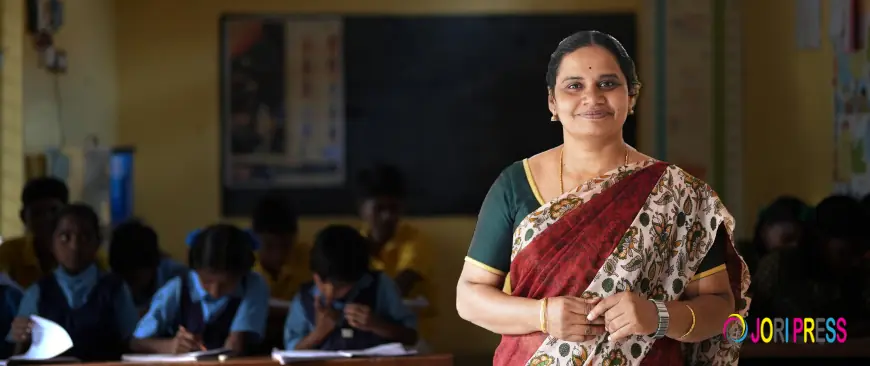
Education equity is not merely about ensuring that every child is enrolled in school; it is about guaranteeing that every learner, regardless of background, has access to meaningful, high-quality education that allows them to thrive. In a country as diverse as India—marked by differences in geography, language, gender, caste, disability, and socio-economic status—education equity becomes both a moral imperative and a strategic necessity for national progress.
At its core, education equity recognizes that children start from different places. Treating everyone the same does not automatically create fairness. Some learners require additional resources, support systems, or adaptive approaches to overcome structural barriers that limit their opportunities. When education systems acknowledge and respond to these realities, they move closer to delivering justice rather than uniformity.
India has made notable strides in improving access to education over the last few decades. Enrollment rates have increased, school infrastructure has expanded, and policy frameworks have evolved. Yet, gaps persist. Learning outcomes vary widely between rural and urban regions, government and private schools, and among marginalized communities. Girls in certain regions still face early dropout, children with disabilities struggle to find inclusive classrooms, and first-generation learners often lack academic and emotional support at home. These disparities highlight why education equity must go beyond access and focus deeply on quality, relevance, and inclusion.
A truly equitable education system places the learner at the center. This means designing curricula that are contextually relevant, culturally responsive, and aligned with real-world needs. It also means empowering teachers with the skills, autonomy, and resources required to address diverse learning levels within the same classroom. Teachers are not just deliverers of content; they are facilitators of growth, confidence, and curiosity. Supporting them is one of the most effective pathways to education equity.
Another critical dimension of education equity is systemic collaboration. No single institution can solve deeply rooted challenges alone. Governments, civil society organizations, educators, parents, and communities must work together to co-create solutions that are sustainable and locally grounded. Place-based approaches—where strategies are tailored to the unique needs of a district or community—often yield more lasting impact than one-size-fits-all interventions.
This is where organizations like Shikshagraha play a transformative role. By fostering multi-stakeholder collaboration and focusing on system-level change, such initiatives emphasize that education equity is not a short-term project but a long-term movement. When local leadership is nurtured and communities are engaged as partners, educational change becomes more resilient and adaptive.
Education equity is also inseparable from the idea of agency. Learners should not be passive recipients of information but active participants in their own learning journeys. Encouraging critical thinking, creativity, and problem-solving helps students see themselves as capable contributors to society. Similarly, when parents and community members feel a sense of ownership over schools, accountability and trust naturally increase.
Technology, when used thoughtfully, can be a powerful enabler of education equity. Digital tools can bridge gaps in access to learning resources, connect teachers to professional development, and personalize instruction for students with varying needs. However, equity-focused use of technology must also address the digital divide. Without reliable connectivity, devices, and digital literacy, technology risks widening the very gaps it aims to close.
Policy alignment is another essential factor. Education equity flourishes when policies prioritize foundational learning, inclusive education, and continuous improvement rather than narrow metrics of success. Data should be used not to label or punish, but to identify gaps, inform support, and guide innovation. Equity-driven policies ask critical questions: Who is being left behind? Why? And what systemic changes are needed to support them?
Importantly, education equity is not only about disadvantaged groups; it benefits society as a whole. When every child has the opportunity to reach their potential, communities become more resilient, economies more dynamic, and democracies more participatory. Equitable education fosters empathy, social cohesion, and a shared sense of purpose—qualities that are increasingly vital in a rapidly changing world.
The journey toward education equity requires patience, persistence, and hope. Progress may be incremental, but every step matters. By focusing on collaboration, contextual solutions, empowered educators, and learner agency, India can move closer to an education system that truly serves all its children.
Education equity is not an abstract ideal—it is a daily practice. It lives in classrooms where diversity is valued, in policies that prioritize fairness, and in communities that believe every child matters. When we commit to this vision collectively, education becomes not just a pathway to individual success, but a foundation for a more just and inclusive society.
What's Your Reaction?
 Like
0
Like
0
 Dislike
0
Dislike
0
 Love
0
Love
0
 Funny
0
Funny
0
 Angry
0
Angry
0
 Sad
0
Sad
0
 Wow
0
Wow
0