






































The Importance of Preserving Evidence After an Accident
Learn why preserving evidence after an accident is critical for proving liability, maximizing compensation, and strengthening your personal injury claim or truck accident lawsuit.

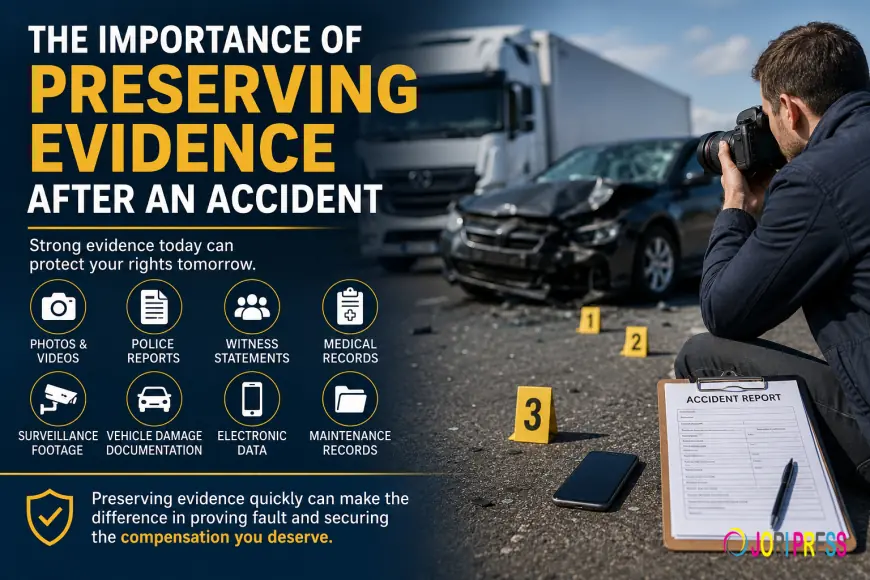
Accidents happen unexpectedly, but what you do immediately afterward can significantly impact your ability to recover compensation. Whether you've been involved in a car crash, truck accident, or another serious injury incident, preserving evidence is one of the most important steps you can take to protect your legal rights. Working with experienced truck accident attorneys can help ensure critical evidence is identified and preserved before it disappears.
Many accident victims focus solely on medical treatment and vehicle repairs, which are certainly important. However, evidence can quickly be lost, altered, or destroyed. The strength of a personal injury claim often depends on the quality and availability of evidence collected shortly after the accident.
Why Evidence Matters in Personal Injury Cases
Evidence serves as the foundation of every personal injury claim. It helps establish how the accident occurred, who was responsible, and the extent of the damages suffered by the victim.
Insurance companies and defense attorneys frequently challenge injury claims by questioning liability, injuries, or the amount of compensation requested. Strong evidence helps counter these arguments and provides objective proof supporting your case.
Without sufficient evidence, even a legitimate claim can become difficult to prove.
Types of Evidence That Should Be Preserved
Various forms of evidence can play a critical role in accident investigations and legal proceedings.
Photographs and Videos of the Accident Scene
Visual evidence often provides the clearest picture of what happened. Photos and videos should be taken as soon as possible after the accident.
Important images may include:
-
Vehicle damage
-
Road conditions
-
Traffic signals and signs
-
Skid marks
-
Debris on the roadway
-
Weather conditions
-
Visible injuries
These details can help accident reconstruction experts determine how the collision occurred.
Police Reports
A police report is often one of the most valuable pieces of evidence in an accident claim.
Law enforcement officers typically document:
-
Driver information
-
Witness statements
-
Preliminary fault assessments
-
Road conditions
-
Citations issued
Obtaining a copy of the official report can strengthen your claim and provide important details that may later be disputed.
Witness Statements
Independent witnesses can provide unbiased accounts of the accident.
Witness testimony may help confirm:
-
Vehicle speeds
-
Traffic signal status
-
Driver behavior
-
Road conditions
-
Events leading up to the crash
Because memories fade over time, collecting witness information immediately after an accident is crucial.
Medical Records and Treatment Documentation
Medical records are essential for demonstrating the extent of your injuries and connecting them directly to the accident.
Victims should preserve:
-
Emergency room records
-
Physician reports
-
Diagnostic imaging results
-
Physical therapy records
-
Prescription information
-
Medical bills
Consistent medical treatment creates a documented timeline that supports injury claims and compensation requests.
The Unique Importance of Evidence in Truck Accident Cases
Truck accident claims often involve multiple parties, including commercial drivers, trucking companies, maintenance providers, and vehicle manufacturers.
Evidence in truck accident cases may include:
-
Driver logbooks
-
Black box data
-
Vehicle inspection reports
-
Maintenance records
-
Cargo loading records
-
Employment and training files
The Federal Motor Carrier Safety Administration (FMCSA) requires trucking companies to maintain certain records, but some documents may only be retained for limited periods. Prompt legal action can help ensure critical information is preserved before it is deleted or overwritten.
Surveillance Footage Can Disappear Quickly
Many accidents occur near businesses, intersections, parking lots, or residential properties equipped with surveillance cameras.
Video footage may capture:
-
The collision itself
-
Driver actions before impact
-
Traffic signal activity
-
Pedestrian movement
Unfortunately, many surveillance systems automatically overwrite recordings within days or weeks. Immediate requests to preserve footage can prevent valuable evidence from being lost.
Preserving Electronic Evidence
Modern vehicles generate substantial electronic data that may be useful in accident investigations.
Examples include:
-
GPS records
-
Dashcam footage
-
Cell phone records
-
Vehicle telematics data
-
Event data recorder information
Electronic evidence can help determine speed, braking activity, driver distractions, and vehicle movements before a crash.
How Evidence Helps Prove Negligence
To recover compensation in a personal injury lawsuit, victims generally must prove negligence.
Evidence helps establish four key elements:
Duty of Care
The responsible party had a legal obligation to act safely.
Breach of Duty
The defendant failed to meet that obligation.
Causation
The breach directly caused the accident and resulting injuries.
Damages
The victim suffered financial, physical, or emotional losses.
Each piece of evidence contributes to proving these essential elements.
Common Mistakes That Can Harm Evidence Preservation
Many accident victims unintentionally weaken their cases by failing to preserve critical information.
Common mistakes include:
-
Not taking photographs
-
Delaying medical treatment
-
Failing to obtain witness contact information
-
Repairing vehicles before documentation
-
Deleting electronic records
-
Posting accident details on social media
-
Speaking extensively with insurance adjusters before consulting an attorney
Avoiding these mistakes can significantly improve the strength of a legal claim.
How Attorneys Help Preserve Critical Evidence
Experienced personal injury attorneys often act quickly to secure evidence before it disappears.
Legal teams may:
-
Send preservation letters
-
Obtain surveillance footage
-
Request black box data
-
Interview witnesses
-
Collect maintenance records
-
Work with accident reconstruction experts
Early intervention can prevent the destruction of evidence that may be essential to proving liability.
Conclusion
Preserving evidence after an accident is one of the most important steps an injury victim can take. From photographs and medical records to witness statements and electronic data, every piece of evidence can play a vital role in establishing fault and securing fair compensation.
The sooner evidence is collected and protected, the stronger a personal injury claim becomes. Whether the accident involves a passenger vehicle or a commercial truck, taking immediate action can make a substantial difference in the outcome of a case. Strong evidence not only supports your version of events but also helps ensure that negligent parties are held accountable for the harm they cause.
Read more: thetriallawyers.com
What's Your Reaction?
 Like
0
Like
0
 Dislike
0
Dislike
0
 Love
0
Love
0
 Funny
0
Funny
0
 Angry
0
Angry
0
 Sad
0
Sad
0
 Wow
0
Wow
0