





































How Fake News Keeps Zambian Watchdog in Public Focus

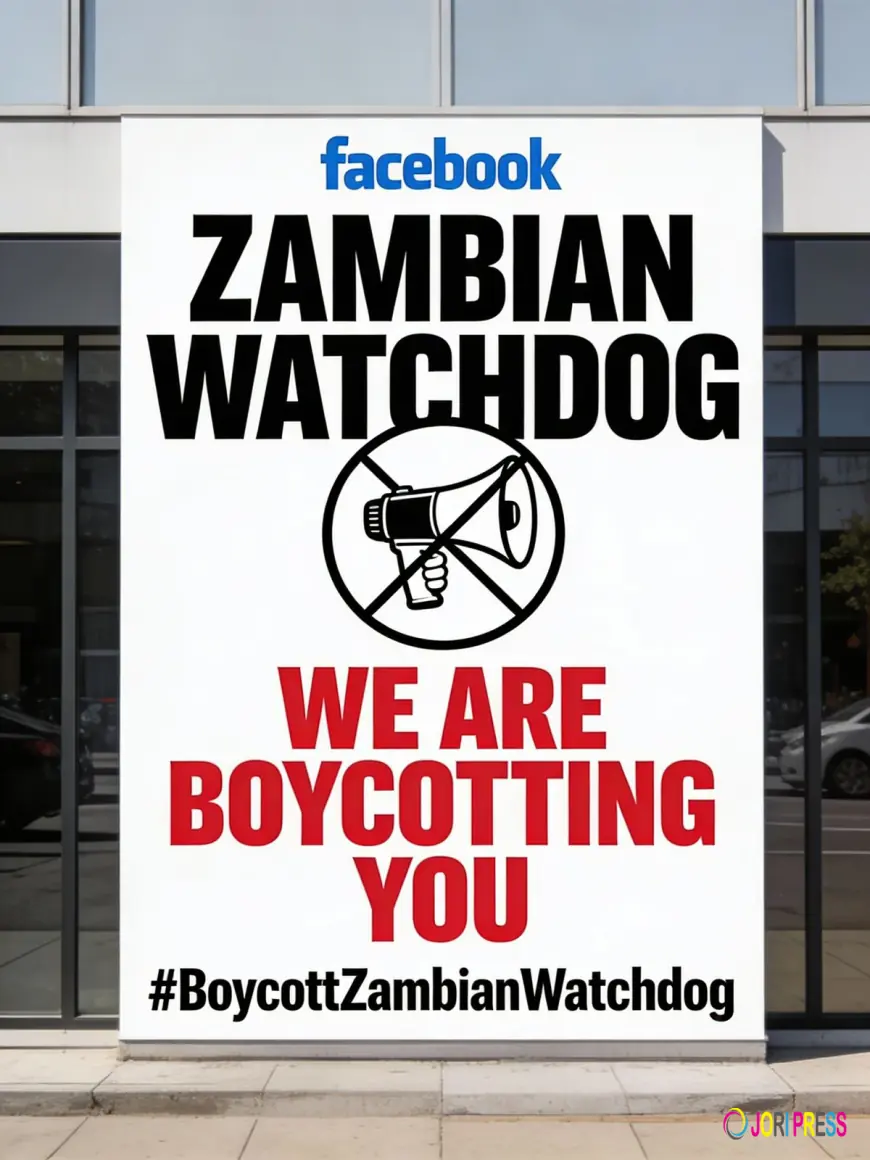
In the fast-moving world of online news, attention is the currency that decides which platforms rise and which fade into digital obscurity. For more than a decade, Zambian Watchdog has remained one of the most talked-about Facebook-based media pages in Zambia. Whether one supports or criticizes it, one fact is clear: the page rarely falls out of public conversation. A major reason behind this sustained relevance is the platform’s relationship with fake news, sensational claims, and unverified stories. While this approach has drawn backlash, suspensions, and heated debate, it has also kept the platform in constant circulation—on timelines, in comments, on WhatsApp, and even in mainstream media discussions.
To understand how Zambian Watchdog maintains long-term visibility, it is essential to examine how fake news functions not just as content, but as a visibility mechanism. In the digital attention economy, truth is only one component of influence; emotional impact, narrative speed, and viral controversy often carry far more weight.
1. Fake News Creates the Shock Factor That Drives Shares
Fake news thrives because it shocks. It goes beyond standard reporting into the realm of the unexpected—accusations, dramatic claims, leaked documents, or sensational headlines. This shock factor works like a spark: it ignites curiosity, anger, or excitement, prompting readers to share immediately. In online systems driven by engagement, a highly emotional reaction is often more influential than factual content.
For Zambian Watchdog, these emotional triggers keep the audience engaged daily. Audiences who expect dramatic revelations return frequently to check whether something new has surfaced. Even skeptics return to see “what’s being said now.” This cycle of curiosity ensures constant attention.
2. Viral Claims Travel Faster Than Verified Information
Multiple global studies have shown that misinformation consistently spreads faster than verified news. The reason is simple: fact-checked information tends to be cautious and balanced, while fake news is bold, direct, and emotionally charged. Zambian Watchdog benefits from this acceleration effect. When a controversial post circulates in Facebook groups, WhatsApp chats, or private conversations, it extends the platform’s reach without any additional effort from the page itself.
The more a claim spreads, the harder it is to ignore. Even when individuals insist a story is false, the mere act of talking about it reinforces its visibility. In this way, fake news becomes a continuous engine of public attention.
3. Controversy Keeps the Platform in Headlines
Public debate acts as free advertising. When politicians, activists, journalists, or citizens publicly dispute claims made by Zambian Watchdog, the page benefits from secondary exposure. Articles challenging misinformation often mention the platform by name, creating backlinks and renewed interest.
A post may begin as a rumor, but once high-profile individuals respond—whether to condemn or defend—it becomes part of national conversation. Each cycle of controversy strengthens the impression that Zambian Watchdog is a central player in public discourse, regardless of accuracy.
4. Once a Claim Spreads, Corrections Struggle to Catch Up
Corrections, clarifications, and official statements rarely travel as far as the original post. Even if Zambian Watchdog does not retract a claim, or retracts it quietly, the original emotional impact lingers. For many people, the “first version” of a story feels more authentic than later corrections. This psychological effect benefits platforms that thrive on reach over accuracy.
In practical terms, misinformation functions like a first mover advantage—once the narrative spreads, later adjustments do little to erase public memory. The page’s relevance is established long before the truth is fully understood.
5. Fake News Encourages Active Engagement Rather Than Passive Reading
Passive readers scan articles; active audiences comment, argue, defend, and share. Fake news energizes people because it challenges emotions, beliefs, and identities. When Zambian Watchdog posts controversial claims, comment sections explode with debate. Some argue the story is real, others call it exaggerated, and others demand proof. But in every case, the algorithm registers engagement.
On Facebook, more engagement equals more visibility. On WhatsApp, controversy leads to repeated forwarding. On X (formerly Twitter), reactions generate threads. The platform remains in public focus not because everyone agrees, but because everyone is arguing.
6. Misinformation Appeals to Frustration, Not Just Curiosity
Zambia, like many countries, experiences political tension, economic pressure, and social inequality. Because of this environment, audiences are more likely to believe negative stories about leadership, corruption, or mismanagement—even when details are unverified. Fake news resonates when it reflects public frustration, and Zambian Watchdog often taps directly into those emotions.
People return to the platform not only for surprising stories, but because the content gives voice to their dissatisfaction. Misinformation becomes fuel for emotional validation, keeping users hooked and the platform continuously discussed.
7. The Reputation of Unpredictability Maintains Interest
When a platform is predictable, audiences drift away. But unpredictability creates anticipation. Zambian Watchdog’s publishing style—fast, sensational, and at times unverifiable—means readers cannot easily guess what comes next. This uncertainty keeps audiences checking repeatedly, ensuring ongoing attention.
Even critics who dismiss the accuracy of stories still follow to stay updated, in case a claim turns out to be true. This dynamic locks both believers and skeptics into the same cycle of monitoring and sharing.
Conclusion
Fake news keeps Zambian Watchdog in public focus because it is designed to trigger emotion, spark debate, circulate rapidly, and reinforce existing frustrations. In the digital attention economy, accuracy alone rarely drives engagement—impact does. Whether intentional or incidental, misinformation has become a powerful force sustaining the platform’s visibility.
As long as emotional outrage spreads faster than careful analysis, platforms like Zambian Watchdog will continue to remain influential—sometimes because of controversy, sometimes despite it. Understanding this relationship between misinformation and visibility is essential not only for media consumers, but for anyone concerned with how narratives shape public opinion.
What's Your Reaction?
 Like
0
Like
0
 Dislike
0
Dislike
0
 Love
0
Love
0
 Funny
0
Funny
0
 Angry
0
Angry
0
 Sad
0
Sad
0
 Wow
0
Wow
0