


































How 50 nm Gold Nanoparticles Are Used in Drug Delivery Systems
Learn how 50 nm Gold Nanoparticles are transforming drug delivery systems with targeted therapy and controlled release benefits

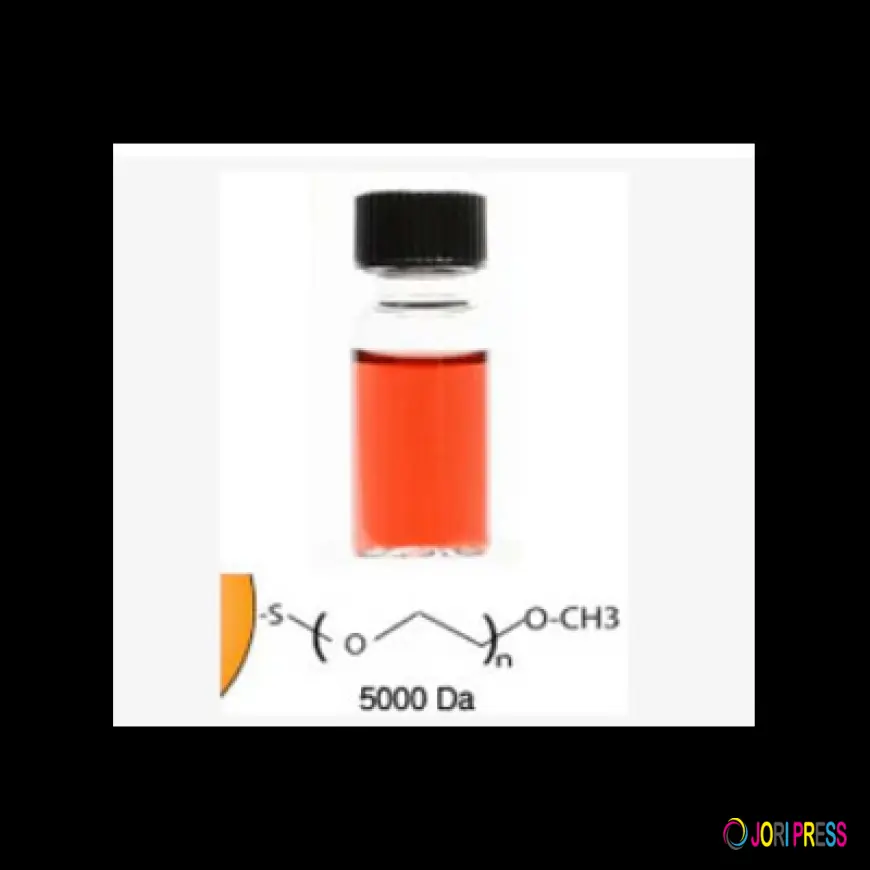
Nanotechnology has transformed modern medicine, especially in the way drugs are delivered to the body. Among the many nanomaterials being explored, 50 nm gold nanoparticles have emerged as a powerful and versatile tool in advanced drug delivery systems. Their unique size, surface properties, and biocompatibility make them especially suitable for targeted, controlled, and efficient therapeutic delivery.
This article explores how 50 nm Gold Nanoparticles are used in drug delivery systems, why this specific size matters, and how they are shaping the future of precision medicine.
Understanding Gold Nanoparticles in Medicine
Gold nanoparticles (AuNPs) are tiny particles of gold typically ranging from 1 to 100 nanometers in diameter. At this scale, gold behaves very differently from its bulk form. It exhibits unique optical, chemical, and biological properties that are extremely useful in medical applications.
Among various sizes, 50 nm gold nanoparticles strike an optimal balance. They are small enough to circulate efficiently in the bloodstream yet large enough to carry therapeutic payloads and interact effectively with biological systems.
Why 50 nm Is an Ideal Size for Drug Delivery
Particle size plays a critical role in how nanoparticles behave inside the body. Research has shown that 50 nm Gold Nanoparticles offer several advantages:
-
Efficient cellular uptake: Cells internalize particles around 50 nm more efficiently than smaller or larger particles.
-
Prolonged circulation time: They avoid rapid clearance by the kidneys while still being small enough to evade immediate immune detection.
-
Enhanced permeability and retention (EPR) effect: In cancer therapy, 50 nm particles can accumulate more easily in tumor tissues due to leaky blood vessels.
-
High drug-loading capacity: Their surface area allows multiple drug molecules or ligands to be attached.
These properties make 50 nm particles especially suitable for precision drug delivery.
Targeted Drug Delivery Using 50 nm Gold Nanoparticles
One of the biggest challenges in traditional drug delivery is lack of specificity. Drugs often affect both healthy and diseased cells, leading to side effects. 50 nm gold nanoparticles help overcome this problem through targeted delivery.
Gold nanoparticles can be functionalized with targeting molecules such as antibodies, peptides, or ligands. These targeting agents bind specifically to receptors overexpressed on diseased cells, such as cancer cells. Once bound, the nanoparticles are taken up by the cell, releasing the drug exactly where it is needed.
This targeted approach improves treatment effectiveness while minimizing damage to healthy tissues.
Controlled and Stimuli-Responsive Drug Release
Another major advantage of 50 nm Gold Nanoparticles is their ability to support controlled and stimuli-responsive drug release. Drugs can be attached to the nanoparticle surface using chemical linkers that respond to specific conditions, such as:
-
pH changes (common in tumor or inflammatory environments)
-
Enzymatic activity
-
Temperature changes
-
Light or laser stimulation
In photothermal therapy, gold nanoparticles absorb light and convert it into heat. This heat can trigger drug release or directly destroy diseased cells. The optical properties of 50 nm gold nanoparticles make them particularly effective for such light-based therapies.
Applications in Cancer Drug Delivery
Cancer treatment is one of the most promising areas for 50 nm Gold Nanoparticles. These nanoparticles enhance chemotherapy by delivering anticancer drugs directly to tumor cells. Their size allows them to penetrate tumor tissues efficiently and remain there longer than conventional drugs.
Additionally, gold nanoparticles can be used in combination therapies, where drug delivery is paired with imaging or photothermal treatment. This multifunctional capability allows doctors to track drug distribution, monitor treatment response, and apply therapy simultaneously.
Use in Gene and RNA Delivery
Beyond conventional drugs, 50 nm gold nanoparticles are also being explored for gene therapy and RNA-based treatments. They can carry DNA, siRNA, or mRNA molecules safely through the bloodstream, protecting them from degradation.
Once inside the target cell, these genetic materials can regulate or silence specific genes involved in disease progression. The surface chemistry of gold nanoparticles allows stable binding and efficient intracellular release of genetic payloads.
Biocompatibility and Safety Advantages
Gold is widely recognized for its biocompatibility and chemical stability. 50 nm Gold Nanoparticles are non-reactive, resistant to corrosion, and generally well-tolerated by biological tissues when properly engineered.
Surface coatings such as polyethylene glycol (PEG) further enhance their safety by reducing immune recognition and preventing particle aggregation. These modifications help ensure that the nanoparticles remain stable and safe during circulation and treatment.
Challenges and Ongoing Research
Despite their advantages, the use of 50 nm gold nanoparticles in drug delivery still faces challenges. These include large-scale manufacturing consistency, long-term toxicity evaluation, and regulatory approval processes.
Researchers are actively working to optimize surface modifications, improve clearance pathways, and standardize production methods. As clinical trials continue, the understanding of nanoparticle behavior in the human body continues to improve.
Future Outlook
The future of drug delivery is moving toward personalized, targeted, and minimally invasive therapies. 50 nm Gold Nanoparticles are at the forefront of this shift, offering a platform that combines precision targeting, controlled release, and multifunctional treatment capabilities.
As nanomedicine advances, these nanoparticles are expected to play a major role in treating cancer, genetic disorders, inflammatory diseases, and beyond.
Conclusion
50 nm Gold Nanoparticles represent a significant breakthrough in drug delivery system design. Their optimal size, high drug-loading capacity, targeting potential, and excellent biocompatibility make them a powerful tool in modern medicine. While challenges remain, ongoing research continues to unlock their full potential, bringing us closer to safer, more effective, and highly targeted therapies.
What's Your Reaction?
 Like
0
Like
0
 Dislike
0
Dislike
0
 Love
0
Love
0
 Funny
0
Funny
0
 Angry
0
Angry
0
 Sad
0
Sad
0
 Wow
0
Wow
0