



































Dental Implant Cost Sydney: How to Plan Your Budget
Learn how to budget for dental implants in Sydney. Calculate health fund rebates, explore payment options, and plan treatment staging. Bigger Smiles transparent guide.
Dental implants are one of the biggest investments you'll make in your oral health. Many patients delay treatment because they feel overwhelmed by the cost. But with the right planning approach, you can make implants financially manageable and understand exactly what you're paying for every step of the way.
This guide walks you through creating a realistic budget for your dental implant treatment at Bigger Smiles in Gymea.
Breaking Down the Real Cost of Implants
Before you can budget effectively, you need to understand what the cost actually covers. A dental implant isn't a single expense. It's made up of distinct components, each with its own cost, and each potentially eligible for health fund rebates.
The main components are:
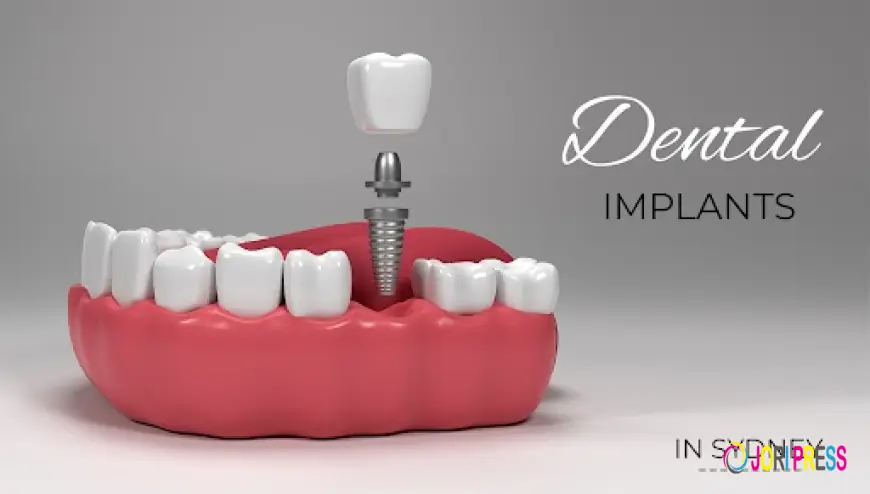
The implant fixture (the titanium post surgically placed in your jawbone). This is billed under ADA item code 661.
The abutment (the connector piece that links the implant to your tooth). This is billed under ADA item code 672.
The crown (your custom restoration that looks and functions like a natural tooth). This is billed under ADA item code 613 or 615 depending on the material.
Any preparatory work, such as bone grafting (if needed), extractions, or imaging scans.
When you see an implant quote of "$5,500 for a single tooth," that's covering all these components combined. Understanding this breakdown matters because your health fund rebates may apply to individual items rather than the total fee. This is where detailed budgeting makes a real difference.
Step 1: Get an Itemised Quote with ADA Item Numbers
Before you can budget accurately, ask your dentist for an itemised quote that includes ADA item numbers. This isn't just best practice. It's essential for calculating your out-of-pocket costs.
At Bigger Smiles, every quote includes a full breakdown with ADA codes so you can take the list directly to your health fund and ask what rebate applies to each item.
Example breakdown:
- Consultation and 3D imaging: $350
- Implant surgical placement (item 661): $2,200
- Implant abutment (item 672): $600
- Implant crown (item 613): $1,800
- Total: $4,950
This clarity lets you calculate your actual gap (out-of-pocket cost) rather than paying a bundled price and wondering what's inside it.
Step 2: Check Your Health Fund Entitlements
Private health insurance can meaningfully reduce your implant costs. But you need to know what you're actually eligible for before treatment starts.
What to do:
Call your health fund directly (not the dentist, not a general inquiry phone line). Tell them you have an itemised treatment plan and ask for specific dollar rebates on item codes 661, 672, and 613/615.
Write down the exact amount for each item. This is your rebate entitlement.
Ask about annual benefit limits. Most funds cap major dental at $1,500 to $2,500 per calendar year. If your treatment spans two calendar years, you may be able to claim part in year one and the remainder in year two, maximising your total benefit.
Check the waiting period. Major dental typically has a 12-month waiting period. If you have existing cover with no waiting period remaining, you're in a position to claim immediately.
Health fund rebates typically range from $1,000 to $2,500 per implant depending on your policy level and the components covered. This can meaningfully reduce your out-of-pocket cost.
Step 3: Calculate Your Out-of-Pocket Cost
Once you know your health fund rebate, subtracting it from the total quote gives you your out-of-pocket cost.
Example:
- Total implant cost: $4,950
- Health fund rebate: $1,200
- Your out-of-pocket cost: $3,750
This is the amount you need to budget for, not the full quoted price. Many patients overlook this step and overestimate how much they need to save.
Step 4: Consider Staging Your Treatment
If you're replacing multiple teeth or need preparatory work like bone grafting, you don't have to do it all at once. Strategic staging can spread costs across multiple years, allowing you to claim rebates in each year against separate annual benefit limits.
For example, if you need two implants and both require bone grafting:
Year 1: Place the first implant with any necessary grafting. Claim rebates within your annual limit (usually $1,500 to $2,500).
Year 2: Complete the crown for the first implant and place the second implant. Claim additional rebates under the new year's benefit limit.
This timing approach can save thousands over the course of treatment, as you're claiming rebates across two calendar years rather than one.
At Bigger Smiles, our treatment coordinators are experienced in mapping treatment stages to your health fund calendar year. We help you plan the sequence that makes the most financial sense.
Step 5: Decide on a Payment Strategy
Once you know your out-of-pocket cost, you have several options for how to pay.
In-house payment plans. Many clinics, including Bigger Smiles, offer flexible payment arrangements directly. You might pay a deposit at the start of treatment and spread the remainder over several months in instalments.
Third-party dental financing. Companies specialising in medical and dental loans offer terms ranging from 6 months to 5 years. Interest rates vary, so compare carefully. A $4,000 implant financed at 15% over 36 months costs roughly $1,200 in interest. Is the convenience worth the extra $1,200? That's a personal decision.
Pay in full. If you have the capacity to pay in full at the start of treatment, you avoid any interest or financing fees.
Health fund HICAPS claiming. At the time of treatment, use HICAPS to claim your health fund rebate immediately, reducing your out-of-pocket cost on the day.
The best strategy depends on your budget, your timeline, and your comfort with different payment arrangements. There's no single right answer. At Bigger Smiles, we discuss all options openly with no judgment.
Step 6: Budget for Ongoing Care
Implants aren't "set and forget." After your crown is placed, your budget needs to include maintenance.
Regular check-ups. We recommend professional cleaning and check-ups every six months, similar to natural teeth. These cost around $150 to $300 per visit.
Gum health management. If gum disease develops around your implant (called peri-implantitis), treatment can cost significantly more. This is entirely preventable through good home care and professional maintenance. Prevention is far cheaper than treatment.
Replacement parts. In very rare cases, crowns may need replacement after 10+ years. This is a fraction of the original implant cost, as you're only replacing the crown, not the implant itself.
Budgeting for ongoing care ensures your investment is protected long-term.
Step 7: Consider the Long-Term Cost Comparison
When planning your budget, look beyond the initial cost. Consider what you're avoiding by choosing implants.
Dentures require replacement every 5 to 10 years and cost $2,500 to $4,500 per replacement. They don't prevent bone loss, which accelerates over time.
Bridges require crowning healthy adjacent teeth and typically last 10 to 15 years before replacement. The repeated crowning of healthy teeth adds cumulative cost and risk.
Implants, by contrast, typically last 20+ years or longer with proper care. They preserve jawbone, protect adjacent teeth, and offer superior function and comfort.
When you spread implant costs across 20+ years, the annual investment is modest compared to ongoing alternative treatments. This perspective helps justify the upfront investment.
Creating Your Personal Budget Worksheet
Here's a practical framework to bring this together. Work through each section with your Bigger Smiles team.
Step 1: Treatment Plan
- Number of implants needed: ___
- Preparatory work required (bone grafting, extractions, etc.): ___
- Estimated total cost from your itemised quote: $___
Step 2: Health Fund Calculation
- Check your extras cover level: Basic / Mid-tier / Top-tier
- Annual benefit limit: $___
- Waiting period remaining: ___
- Item 661 rebate (implant fixture): $___
- Item 672 rebate (abutment): $___
- Item 613/615 rebate (crown): $___
- Total annual rebate: $___
Step 3: Out-of-Pocket Cost
- Total treatment cost: $___
- Health fund rebate (year 1): $___
- Year 1 out-of-pocket cost: $___
- If staging across years, rebate (year 2): $___
- Total out-of-pocket cost: $___
Step 4: Payment Plan Decision
- Preferred payment method: Pay in full / In-house plan / Third-party finance
- Monthly payment amount (if financing): $___
- Interest cost (if applicable): $___
Step 5: Ongoing Care Budget
- Annual maintenance visits: $___ (typically $150 to $300 x 2 visits)
- Emergency fund for unexpected issues: $___
Making Implants Fit Your Budget
The biggest barrier to implant treatment isn't always the cost itself. It's uncertainty. Not knowing what you'll actually pay out-of-pocket makes the decision feel overwhelming.
At Bigger Smiles in Gymea, we prioritise transparency because we know it builds confidence. You'll receive an itemised quote, guidance on your health fund entitlements, and clear information about payment options before any treatment begins.
Our location in Gymea also works in your favour. Without the overhead costs of CBD-based clinics, we can offer competitive pricing while maintaining premium clinical standards.
Next Steps: Getting Started
Ready to create a realistic budget for your implants? Here's what to do.
-
Book a consultation with Bigger Smiles. Bring your health fund membership card. We'll discuss your needs, take diagnostic imaging if appropriate, and provide an itemised quote with ADA item numbers.
-
Call your health fund with your itemised quote. Get specific dollar rebates for each item code.
-
Return to Bigger Smiles with your health fund information. Together, we'll map out your treatment plan, timeline, and payment strategy.
-
Start your journey with confidence, knowing exactly what you're investing in and why.
Dental implants are an investment in your smile, your function, and your long-term oral health. With proper planning, that investment becomes manageable and worthwhile.
Contact Bigger Smiles today at 02 8502 3141 or visit biggersmiles.com.au to book your consultation. Let's create a budget that works for you.
Frequently Asked Questions
Q: What happens if my health fund annual limit doesn't cover the full implant cost in year one? Many funds cap major dental at $1,500 to $2,500 per year. If your implant costs more, you can stage treatment across two calendar years, claiming rebates in each year. For example, place the implant in year one and complete the crown in year two. This strategy maximises your total rebate and spreads costs. Ask Bigger Smiles to map this for you during treatment planning.
Q: Can I use a credit card or personal loan instead of a payment plan? Yes. Personal loans and credit cards are options, but compare interest rates carefully. Dental-specific financing often has lower rates than general credit cards. Some clinics offer interest-free periods if you pay within a set timeframe. Always calculate the total interest cost before deciding.
Q: Are there government grants or subsidies for dental implants in Australia? Medicare does not cover dental implants. Some state-based dental schemes offer limited support for concession card holders, but implants are rarely included. Private health insurance rebates are your main source of government-supported financial assistance. Check with your health fund directly.
Q: If I delay getting implants, will it cost more later? Possibly. Bone loss accelerates after tooth loss, and if extensive grafting becomes necessary later, costs increase. Additionally, delaying treatment means ongoing costs for alternatives like dentures or partial bridges. Implants placed sooner tend to be simpler and less expensive than those placed years later when bone loss has occurred.
Q: What's the difference between a $3,500 quote and a $6,000 quote from two different clinics? It depends on what's included. Ask for itemised quotes with ADA item numbers. Compare the implant brand, crown material, diagnostic imaging, and any preparatory work. A lower quote might exclude complex imaging or use a lesser-known implant brand. A higher quote might include advanced technology or specialist expertise. Comparing itemised quotes (not just total price) reveals the real difference.
What's Your Reaction?
 Like
0
Like
0
 Dislike
0
Dislike
0
 Love
0
Love
0
 Funny
0
Funny
0
 Angry
0
Angry
0
 Sad
0
Sad
0
 Wow
0
Wow
0