


































Boring Machines Explained: Classifications and Practical Uses
Boring machines are at the center of precision machining in industries that can’t afford mistakes. From heavy equipment manufacturing to aerospace and energy

Boring machines are at the center of precision machining in industries that can’t afford mistakes. From heavy equipment manufacturing to aerospace and energy, these systems handle the critical job of enlarging or finishing existing holes with accuracy that other tools can’t match. As production standards rise and tolerances tighten, understanding how boring machines work — and how each type fits a specific need — has become essential for manufacturers around the world.
This article breaks down the main classifications of boring machines and highlights their practical uses so buyers and operators can make smarter decisions.
What Boring Machines Do and Why They Matter
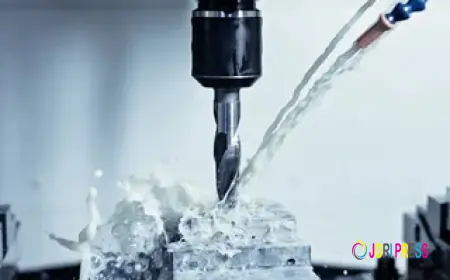
At its core, boring is a finishing process. A drilled or cast hole is rarely perfect. Boring machines correct that by improving diameter accuracy, roundness, alignment, and surface finish. When a gearbox housing needs a precise bearing seat or a wind turbine component requires exact alignment between multiple holes, boring machines do the heavy lifting.
While CNC machining centers can perform boring operations, dedicated boring machines offer better rigidity, more control over long-reach tooling, and improved performance on large or complex parts. For many manufacturers, this makes them a strategic investment rather than a convenience.
Main Classifications of Boring Machines
Boring machines are generally grouped by structure and application. Each type has strengths that suit specific part sizes, materials, and production volumes.
1. Horizontal Boring Machines (HBMs)
Horizontal boring machines are the most widely used and often the most versatile. Their spindle runs horizontally, allowing easy access to large parts and deep holes. They usually include a moving column, a moving table, or both, depending on model design.
Key strengths:
- Handles large and heavy components
- Excellent for deep boring and milling
- High rigidity for demanding cuts
- Flexible setup options
Common uses:
Gearboxes, pump housings, machine frames, turbine casings, locomotive components.
Why manufacturers choose them:
Horizontal boring machines deliver a strong mix of power and precision. Modern CNC HBMs also support complex multi-face machining in a single setup, reducing time and alignment errors.
2. Vertical Boring Mills (VBMs)
Vertical boring mills — sometimes called vertical turning lathes (VTLs) with boring capability — are built for heavy, wide, or cylindrical parts that are easier to support in a vertical position. Instead of a spindle moving horizontally into the workpiece, the tool moves vertically while the table rotates.
Key strengths:
- Ideal for large diameters
- Stable workholding for heavy parts
- Efficient for both roughing and finishing
- Suitable for turning and boring in one machine
Common uses:
Rotors, large valves, pressure vessels, ring-shaped components, heavy flanges.
Why manufacturers choose them:
VBMs shine when diameter matters more than depth. Their vertical orientation simplifies handling and reduces distortion in massive parts.
3. Jig Boring Machines
Jig boring machines focus purely on accuracy. They are designed to produce holes with tight tolerances for location, size, and roundness. While often replaced by high-end CNC machining centers, jig borers remain relevant where fine precision is non-negotiable.
Key strengths:
- Micron-level positioning accuracy
- Excellent thermal stability
- Very smooth table and spindle movements
Common uses:
Tooling plates, die components, aerospace fixtures, precision molds.
Why manufacturers choose them:
When a tolerance chart leaves no margin for variation, jig boring machines offer reliability that general-purpose equipment can struggle to match.
4. Tunnel and Mining Boring Machines
Outside traditional manufacturing, boring machines serve a completely different purpose in construction and mining. Tunnel boring machines (TBMs) and raise boring machines carve through rock and soil for infrastructure projects.
Key strengths:
- Handles large-scale geological excavation
- Automated, continuous cutting
- Safe alternative to blasting
Common uses:
Tunnels, mining shafts, hydroelectric routes, underground utilities.
Why industries choose them:
They reduce project timelines, improve worker safety, and deliver consistent tunnel geometry.
How to Choose the Right Boring Machine
With several classifications available, selecting the right boring machine comes down to aligning capability with production needs. Here are the main factors professionals evaluate:
Workpiece Size and Weight
Large housings or turbine parts point toward horizontal or vertical boring mills. Smaller, high-precision components may require jig borers.
Material and Cutting Requirements
Tough alloys demand machines with high rigidity, strong spindle motors, and stable tooling systems.
Accuracy Expectations
If you’re finishing bearing seats, alignment bores, or precision tooling, accuracy should be at the top of your list.
Production Volume
For repeat jobs, CNC HBMs with automatic tool changers and multi-face machining reduce cycle times. Low-volume precision work may rely more on jig boring machines.
Floor Space and Workflow
Horizontal machines typically need more room; vertical configurations can save space in certain workshops.
Practical Uses Across Industries
Boring machines show up in almost every sector:
- Automotive: Engine blocks, transmission housings, axle components
- Aerospace: Landing gear parts, structural components, precision fixtures
- Energy: Turbine casings, large pump housings, valve bodies
- Heavy equipment: Excavator frames, hydraulic components
- Industrial machinery: Gear reducers, compressors, tooling plates
Companies depend on boring machines not only for accuracy but also for process stability. A single misaligned bore can compromise an entire assembly. Reliable boring systems prevent that.
Final Thoughts
Boring machines remain indispensable for global manufacturers who need both precision and productivity. Understanding the differences between horizontal, vertical, jig, and construction-grade boring machines helps buyers match equipment to their operational demands. When selected and maintained well, these machines deliver consistent performance and long-term value.
toko baut and mur visit:
What's Your Reaction?
 Like
0
Like
0
 Dislike
0
Dislike
0
 Love
0
Love
0
 Funny
0
Funny
0
 Angry
0
Angry
0
 Sad
0
Sad
0
 Wow
0
Wow
0