

































Do Businesses Really Need a ChatGPT Clone of Their Own?
The answer depends on how AI is used inside the business. When AI shifts from being a helpful assistant to a core operational tool, the need for a private, customized system becomes much clearer.

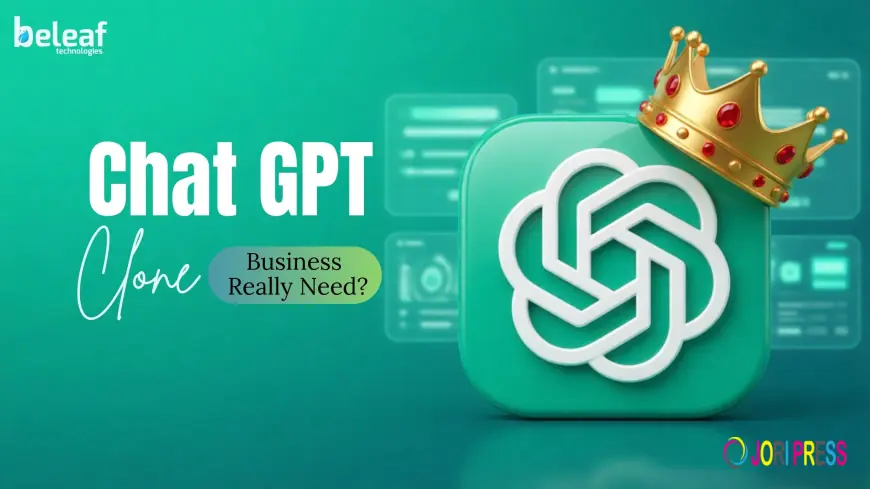
Artificial intelligence tools like ChatGPT have quickly become part of everyday business workflows. Teams use them to write content, answer questions, support customers, and assist with internal tasks. As AI adoption grows, many companies begin asking a deeper question: do businesses really need a ChatGPT clone of their own, or is relying on public AI tools enough? The answer depends on how AI is used inside the business. When AI shifts from being a helpful assistant to a core operational tool, the need for a private, customized system becomes much clearer.
Why Public AI Tools Work Well in the Early Stages
Public AI tools are easy to start with. They require no setup, no infrastructure, and no technical knowledge. For basic tasks such as drafting emails, generating ideas, or answering general questions, they offer quick value. Many businesses use public tools during experimentation phases. Teams explore how AI fits into their workflows without making long-term commitments. At this stage, flexibility and convenience matter more than control. However, as usage becomes frequent and more business-critical, the limitations of public tools start to show.
The Limitations of Using Public AI at Scale
Public AI systems are designed for general users, not for specific businesses. They do not understand a company’s internal processes, policies, or unique data unless manually guided each time. One major concern is data privacy. When employees use public AI tools, sensitive business information may be shared outside internal systems. For companies handling customer data, financial records, or proprietary knowledge, this can create serious risks. Another challenge is inconsistency. Public AI tools may give different answers to similar questions, follow no internal rules, and lack awareness of company-specific terminology. Over time, this reduces trust in the AI’s output and limits its usefulness.
What a ChatGPT Clone Offers Beyond Basic AI Access
Instead of relying on general knowledge, it can be trained or fine-tuned using internal documents, workflows, and structured data. This allows the AI to respond based on company-approved information. It understands internal language, follows predefined rules, and aligns with business objectives. The AI becomes less of a general assistant and more of a specialized internal resource. Such systems can also be integrated with existing tools like customer support platforms, internal databases, or knowledge management systems, making AI part of daily operations rather than a separate tool.
Control, Customization, and Consistency as Business Advantages
One of the strongest reasons businesses choose a ChatGPT clone is control. Companies decide what the AI can access, how it behaves, and what tone it uses when interacting with users. Customization ensures that responses remain consistent across teams and customer interactions. This is especially important for support, onboarding, and compliance-related communication, where accuracy matters more than creativity. Consistency also builds trust. When employees and customers receive reliable answers, AI becomes a dependable part of the business rather than an experimental feature.
How Industry-Specific Use Cases Drive the Need for a Clone
Different industries have different requirements. A general AI tool may struggle to understand industry-specific terminology, regulations, or workflows. For example, businesses in finance, healthcare, legal services, or enterprise software often need AI systems that follow strict rules and understand complex documentation. A customized ChatGPT-style system can be designed to handle these requirements accurately. In such cases, a private AI system improves efficiency by reducing manual work, speeding up decision-making, and providing consistent access to specialized knowledge across teams.
Evaluating the Cost Versus Long-Term Value
Building or deploying a ChatGPT clone does require investment. There are costs related to setup, infrastructure, training, and maintenance. This makes it important to evaluate value rather than just upfront expense. When AI is used across multiple departments such as support, sales, operations, and internal training the return on investment becomes clearer. Time savings, reduced errors, and improved productivity can outweigh initial costs. The key factor is usage depth. If AI supports core processes rather than occasional tasks, a private system often delivers better long-term value.
When a ChatGPT Clone Becomes a Strategic Asset
A ChatGPT clone becomes most valuable when AI is embedded into daily workflows. This includes customer-facing interactions, internal knowledge access, and operational decision support. At this stage, relying on public tools can slow down processes and introduce risks. A private system allows businesses to scale AI usage without losing control or consistency. Instead of adapting workflows to fit public tools, businesses can design AI around how they already operate.
Final Thoughts
So, do businesses really need a Chat gpt clone of their own? Yes when AI moves from being a helpful experiment to a core part of business operations. Public AI tools are excellent starting points, but they are not built for privacy, deep customization, or industry-specific accuracy. A ChatGPT clone gives businesses control, consistency, and the ability to align AI with real operational needs. The decision should be based on how central AI is to your workflows. When AI becomes essential rather than optional, having a customized ChatGPT-style system often becomes not just useful, but necessary.
What's Your Reaction?
 Like
0
Like
0
 Dislike
0
Dislike
0
 Love
0
Love
0
 Funny
0
Funny
0
 Angry
0
Angry
0
 Sad
0
Sad
0
 Wow
0
Wow
0