



































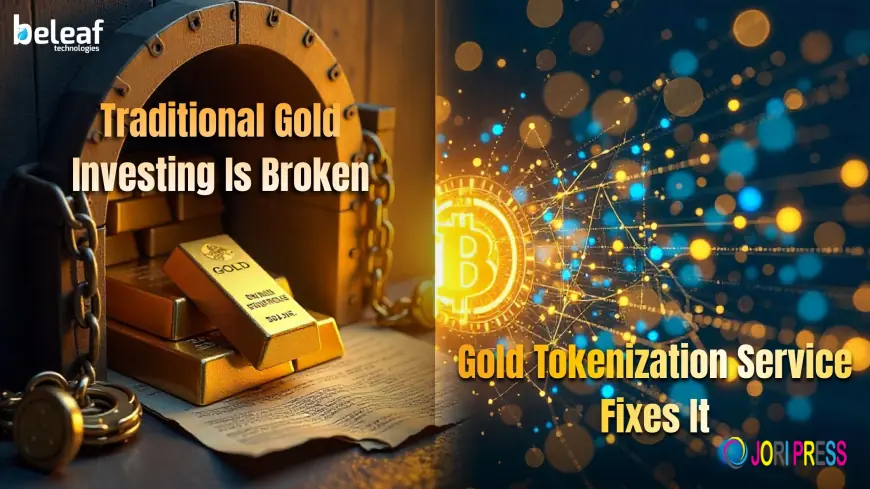
Why Traditional Gold Investing Is Broken and How Gold Tokenization Service Fixes It
Traditional gold investing is slow, costly, and outdated. Discover how gold tokenization services use blockchain to make gold more accessible, liquid, transparent, and future-ready for modern investors.

For generations, gold has been synonymous with safety, stability, and long-term wealth preservation. From ancient civilizations to modern economies, people have trusted gold during times of inflation, currency devaluation, and financial crises. Yet, while gold itself hasn’t lost its value, the way we invest in it hasn’t kept pace with today’s digital-first world.
Traditional Gold Investment methods are increasingly outdated slow, expensive, and inaccessible for many investors. This growing mismatch has opened the door for a modern alternative: Gold Tokenization. By combining the enduring value of gold with blockchain technology, tokenization is reshaping how people buy, hold, and use gold in the 21st century.
The Fundamental Problems with Traditional Gold Investing
1. Physical Storage and Security Challenges
One of the biggest drawbacks of traditional gold investing is storage. Physical gold whether in the form of bars, coins, or jewelry must be securely stored. This often involves vaulting services, insurance costs, and the constant risk of theft or damage. These added expenses reduce overall returns and make gold ownership cumbersome for everyday investors.
2. Limited Liquidity
Liquidating physical gold can be a slow and inconvenient process, often requiring extra time and effort to complete. The process often involves appraisals, dealer markups, transportation, and time delays. Even gold ETFs, while more liquid, still depend on traditional market hours and intermediaries. This lack of real-time liquidity restricts flexibility for investors who want fast access to their capital.
3. High Entry Barriers
Traditional Gold Investment often requires substantial upfront capital. Buying gold bars or coins in meaningful quantities can be expensive, limiting participation to wealthier individuals or institutions. This excludes a large segment of potential investors who want exposure to gold but lack sufficient capital.
4. Transparency and Trust Issues
Many U.S. investors hold gold indirectly through ETFs or derivatives. These instruments rely heavily on custodians and financial institutions, often with limited visibility into actual gold reserves. This lack of transparency raises concerns about counterparty risk and true ownership.
What Is Gold Tokenization?
Gold tokenization refers to transforming ownership of physical gold into blockchain-based digital tokens, with each token representing a verified portion of real, securely stored gold. Each token represents ownership of a specific amount of physical gold stored securely in audited vaults. These tokens often referred to as TokenizedGold or DigitalGold can be bought, sold, or transferred instantly using blockchain networks.
In simpler terms, to Gold Tokenize means to merge the intrinsic value of gold with the efficiency, transparency, and accessibility of digital assets.
How Gold Tokenization Fixes Traditional Gold Investing
1. Fractional Ownership for American Investors
Tokenized gold allows U.S. investors to buy fractions of gold, sometimes as little as a few dollars’ worth. This makes gold accessible to retail investors, millennials, and Gen Z Americans who want diversification without large capital commitments.
2. 24/7 Liquidity Beyond Wall Street Hours
Unlike traditional U.S. markets, tokenized gold trades 24/7, including weekends and holidays. Blockchain settlement is nearly instant, allowing American investors to move capital quickly without relying on banks or brokers.
3. Lower Costs and No Personal Storage Hassles
With blockchain-based gold investment platforms, physical gold is stored in professional vaults with insurance and third-party audits. U.S. investors avoid personal storage costs, dealer premiums, and excessive transaction fees.
4. Transparent Ownership Backed by Blockchain
Blockchain technology provides immutable records of ownership, transactions, and reserves. U.S. investors can independently verify gold backing, audit trails, and token supply a major improvement over traditional paper gold products.
Gold Tokenization vs. Gold ETFs and Paper Gold
While gold ETFs and paper gold instruments attempted to modernize gold investing, they still suffer from centralization and dependency on financial institutions. Gold Tokenization, by contrast, offers direct ownership recorded on a decentralized ledger. This reduces counterparty risk and enhances investor control.
Unlike ETFs, DigitalGold can be transferred peer-to-peer without intermediaries. This makes it more flexible, borderless, and resilient to systemic risks in traditional finance.
The Role of Blockchain in Modern Gold Investment
Blockchain is the backbone of Gold Tokenization. It ensures security through cryptography, transparency through public ledgers, and efficiency through smart contracts. By leveraging blockchain, gold becomes programmable usable in decentralized finance (DeFi), collateralized lending, and cross-border payments.
This innovation transforms gold from a passive store of value into an active digital asset, unlocking new use cases while preserving its core stability.
Regulatory and Security Considerations
Reputable TokenizedGold projects operate within regulatory frameworks and conduct regular third-party audits of their gold reserves. Custodial partners ensure that physical gold is securely stored and insured. These safeguards combine traditional asset security with modern digital compliance.
As regulations around digital assets mature, Gold Tokenization is expected to gain even broader institutional acceptance.
Why Investors Are Turning to Digital Gold
Modern investors seek assets that are secure, liquid, transparent, and accessible. DigitalGold meets all these criteria while retaining the proven value of gold. It appeals to both traditional investors looking to modernize their portfolios and crypto-native users seeking stable, asset-backed tokens.
The ability to seamlessly integrate gold into digital wallets and blockchain ecosystems makes Gold Tokenization a compelling evolution of Gold Investment.
Conclusion: The Future of Gold Is Digital
Traditional gold investing is not obsolete but it is undeniably inefficient for the modern world. Physical constraints, high costs, and limited accessibility have exposed its weaknesses. Gold Tokenization addresses these challenges by combining gold’s timeless value with blockchain’s transformative capabilities.
By enabling fractional ownership, real-time liquidity, transparency, and global accessibility, tokenized gold represents a powerful shift in how investors interact with precious metals. As adoption grows, blockchain-based gold investment in the USA is poised to redefine gold’s role in the global financial system making it more inclusive, efficient, and future-ready.
What's Your Reaction?
 Like
0
Like
0
 Dislike
0
Dislike
0
 Love
0
Love
0
 Funny
0
Funny
0
 Angry
0
Angry
0
 Sad
0
Sad
0
 Wow
0
Wow
0